Connect with us

articles

Analysis of Ancient Sculptures in the Jain Temples of Nainagiri

Published

on

Analysis of Ancient Sculptures in the Jain Temples of Nainagiri
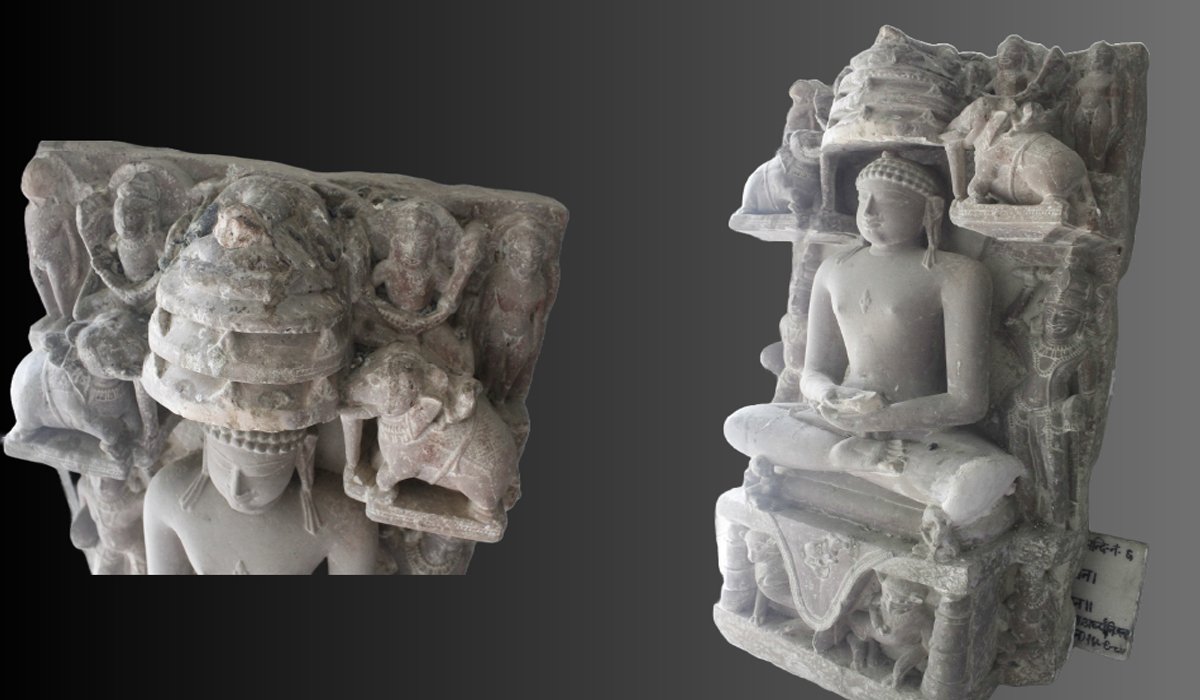
The Jain temples of Nainagiri preserve a rich corpus of ancient sculptures that illuminate both religious devotion and regional artistic traditions in central India. These images, carved predominantly in sandstone and marble, represent major Tirthankaras and attendant deities, and together they chart a long history of patronage at this sacred hill site.

The Sacred Landscape of Nainagiri

Nainagiri, also known as Reshandigiri, is located in Chhatarpur district of Madhya Pradesh at approximately 24°9′ N and 79°7′ E, with an elevation of about 470 meters. Nestled within the Vindhyan ranges, the site lies in the ecological zone of Panna National Park and the Baxwaha Forest Reserve, on the northern bank of the Semra Pathara river, a tributary of the Beban.

The hill is revered as the liberation ground of five munis, which enhances its religious significance within the Jain tradition. Archaeological indicators link the region to the Mesolithic age, while the surviving temples and sculptures testify to continued patronage over many centuries.

Iconography at Nainagiri Hill Jain Temple

The Nainagiri Hill Jain Temple complex houses several important images of Tirthankaras, each displaying distinctive iconographic features. These sculptures encode theological concepts through posture, attributes, attendant figures, and emblematic animals known as lanchhanas.

The image of Adinath in temple number 8 is carved in sandstone with dimensions of approximately 78 x 44 x 20 centimeters. Vidhyadharas appear at the top corners, elephants perform abhisheka to symbolize the supremacy and honor accorded by all beings, while attendants flank the Jina, with a bull at the lanchhana and a lion on the pedestal.

Parshvanath images housed in temple number 37, also in sandstone, show snake hood and tail at the lanchhana, with parikar forms that are curved, rectangular, or absent, yet otherwise share similar compositional elements with the Adinath image.

Sculptures in the Siddha Temple

Within the Siddha Temple, multiple sculptures extend the iconographic range of the site. These include further depictions of Adinath, other unidentified Tirthankaras, and a striking seated Parshvanath.

One sandstone image of Adinath, measuring about 128 x 27 x 21 centimeters, features both simple and decorated halos, a trijata hairstyle with multiple locks, and chauri-bearer attendants, preserving the same core elements observed in the hill temple image. Another Tirthankara in kayotsarga posture, also in sandstone and measuring roughly 106 x 43 x 25 centimeters, lacks a visible lanchhana but shows multiple hair locks that may suggest an identification with Adinath.

The Parshvanath image in this temple is characterized by a smiling face, seated padmasana posture on a snake, elongated ears, and a seven-headed snake hood, with an inscription in Nagiri script adding epigraphic interest. A related composition, “Parshvanath and Attendant,” measuring about 88 x 43 x 23 centimeters, shows a five-headed snake hood, tri-chattra, elephants flanking the Jina, two small attendants near the legs, a beautiful attendant in tribhanga, and a lion at the pedestal.

Images from the Library Depository

The library depository at Nainagiri preserves additional sculptures that broaden the understanding of local devotional practices. These include representations of Tirthankaras as well as attendant deities such as Ambika and Gomedh.

An image of Ajitnath, measuring approximately 103 x 27 x 21 centimeters, presents the Jina in kayotsarga posture with vidhyadharas above, tri-chattra, elephants performing abhisheka, elongated ears, a thick upper lip, attendants in tribhanga, an elephant as lanchhana, and lions on the pedestal. The Ambika sculpture, around 99 x 32 x 27 centimeters, shows the goddess in sambhanga posture with a five-hooded snake, plump body, necklace, armband, katiband, uttariya, anklet, and a child in her arms, revealing a rich treatment of jewelry and maternal imagery.

A composite sandstone panel of Gomedh and Ambika, measuring about 98 x 61 x 21 centimeters, depicts the figures in ardhapriyanka posture. Smaller Tirthankara images include a white marble Chandraprabhu (44 x 34 x 17 centimeters) seated in padmasana with a moon symbol on the pedestal, and a black marble Tirthankara (16 x 12 x 4 centimeters) lacking a clear lanchhana, possibly reflecting either damage or a more aniconic intention.

Major Tirthankara Images and Stylistic Observations

Two large sculptures, one of Adinath and one of Parshvanath, stand out for their scale and refined workmanship. These images embody the culmination of iconographic conventions observed elsewhere in the complex.

The large sandstone Adinath, measuring about 150 x 78 x 41 centimeters, is seated in padmasana on a decorated pedestal in dhyana mudra, with a well-carved prabhamandal behind the head, a srivatsa symbol on the chest, and a bull as lanchhana, marking a complete and canonical representation. The Parshvanath image, around 61 x 41 x 23 centimeters, shows the Jina in padmasana with dhyana mudra, hair locks touching the shoulders, srivatsa motif, and a multi-headed naga canopy above, with a chipped left knee that records the passage of time and the vulnerability of stone icons.

Taken together, the sculptures of Nainagiri reveal a sophisticated visual language that integrates posture, gesture, attendants, and animal emblems into a coherent theological program. The continuity of iconographic themes across temples and centuries underscores the sustained patronage of Jain communities at this sacred hill site, while local stylistic variations enrich the broader history of Jain art in central India.

articles

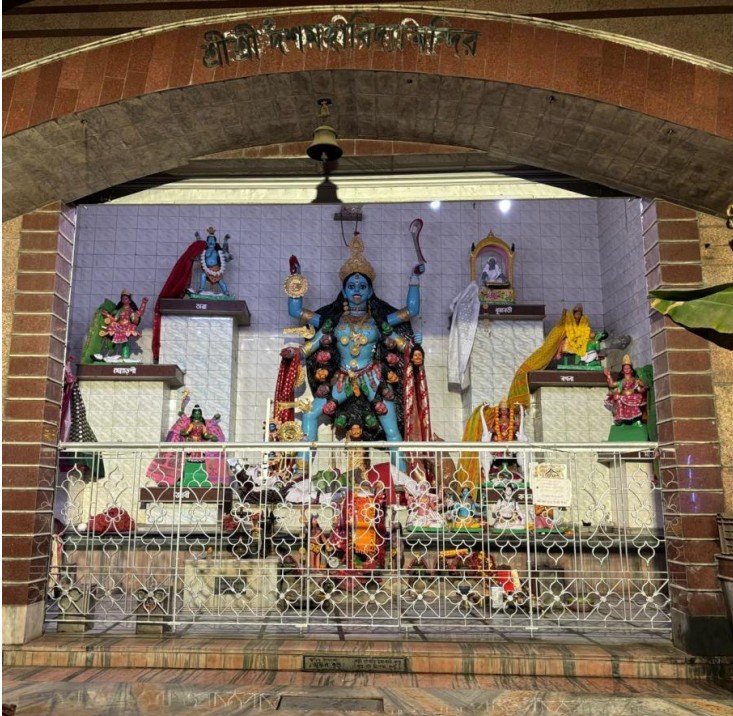
The Trail of Omkari : A Spiritual Corridor of Bangla Shaktipeeths

Published

on

By

About the Article Author - Dr. Mrittunjoy Guha Majumdar

Dr. Mrittunjoy Guha Majumdar, Chair – IHAR Science Committee, is an Adjunct Professor at the National Institute of Advanced Studies Bengaluru and Assistant Professor at Amrita Vishwavidyapeetham, Delhi NCR. Having completed his doctorate from Cavendish Laboratory at the University of Cambridge, he has been an institutional postdoctoral fellow at Harvard University, a senior postdoctoral researcher at the Indian Institute of Science – Bangalore (funded by the Office of the Principal Scientific Advisor to the Government of India) and a postdoctoral associate of Nobel Laureate (Physics, 1973) Prof. Brian Josephson at the University of Cambridge. He has been a Trinity Barlow Scholar (2015-2018), Nehru Scholar (2014-2018), INSPIRE Scholar (2011-2014) and TIFR NIUS Fellow (2012-2014). He was a lead speaker in the domain of quantum error correction at the National Quantum Mission (NQM) strategic consultation meeting in July 2023. His area of research expertise is in entanglement, quantum information and the foundations of quantum physics. He has had training in Artificial Intelligence from the MIT Schwarzmann School of Computing, with one of his recent research focus-areas being Quantum Machine Learning (QML). Dr. Guha Majumdar has previously worked with the Ministry of Human Resource Development (Government of India), UNESCO and G20 on education and science policy. He has also been a science communicator, with his documentary on quantum mechanics aired on Doordarshan, under the Science India initiative. His book ‘From Shiva to Schrödinger’, published by the Penguin Randomhouse group, has been a bestseller. He is the national convenor of Mandala, that intends to bridge contemporary science and Indic thought, in a rigorous and self-consistent manner, at the ontological as well as the epistemological and normative levels.

Continue Reading

articles

Dokra: Folk art of west Bengal

Published

on

By

About the Article Author - Prof. Utkalika Sahoo

Utkalika Sahoo is an Assistant professor at Bangabasi Evening College. Earlier, she has been teaching at Naihati RBC Women’s College since 2010.She did her Masters in History from Jadavpur University and MPhil in the Department of International Relations from Jadavpur University. Currently, she is doing her PhD in the Department of Modern History from Calcutta University. Her PhD topic is Partition Literature. She gives NET SET coaching at Kalyani University. She has written more than 30 articles and books. She also writes articles in foreign newspapers.

Continue Reading

articles

Exploring the Buddha’s Relics: IHAR at Rai Pithora Quila

Published

on

The Indian History Awareness and Research (IHAR) team recently visited the Rai Pithora Quila complex, which is currently hosting a significant exhibition focused on the Pipirawaha discoveries associated with the Buddha’s relics and precious gems. This exhibition marks a landmark initiative by the Ministry of Culture, as it brings together, for the first time, key inventories from both the Indian Museum, Kolkata, and the National Museum, New Delhi.

The central attraction of the exhibition is the Pipirawaha relics and gemstones, presented alongside a detailed archaeological and historical narrative. Visitors are able to understand not only the importance of these relics but also the story of their discovery, excavation, and interpretation over time. The use of high-quality digital displays and archaeological reconstructions makes the presentation engaging and easy to follow for both scholars and the general public.

A major highlight of this exhibition is the collaboration between the Indian Museum and the National Museum. Objects that were earlier displayed separately have now been brought together in a single space, allowing for a more complete understanding of early Buddhist material culture. IHAR expresses its sincere appreciation to Dr Sayan Bhattacharya, Director, Indian Museum for his valuable inputs, which played an important role in making this collaboration possible.

The exhibition also showcases, for the first time in this setting, a wide range of Buddhist iconography and tablets from the National Museum’s collection. These objects demonstrate the development of Buddhist art and symbolism across different periods and regions. Among the most important displays is the famous Nalanda Inscription, which highlights Nalanda’s role as a major centre of learning and its connections with the wider Buddhist world.

Another important aspect of the exhibition is its focus on India’s maritime links with Southeast Asia. Through inscriptions, artefacts, and explanatory panels, the exhibition explains how Buddhist ideas, art forms, and traditions travelled from India to regions such as Southeast Asia via sea routes. This section helps visitors understand Buddhism as a dynamic and expansive tradition shaped by trade, travel, and cultural exchange.

The display of Pala-era manuscripts is another major attraction. These manuscripts include important Buddhist texts, especially versions of the Prajñāpāramitā, and reflect the scholarly and spiritual vibrancy of eastern India during the Pala period. Their inclusion adds a strong intellectual and philosophical dimension to the exhibition, complementing the archaeological displays.

Overall, the exhibition at Rai Pithora Quila presents a well-balanced and thoughtful account of India’s Buddhist heritage. It successfully combines relics, inscriptions, manuscripts, iconography, and digital tools to offer visitors a clear and meaningful understanding of Buddhism’s historical journey within India and beyond.

The IHAR team greatly appreciated the effort taken to present complex historical material in an accessible manner. The exhibition stands out as a model for collaborative museum practice and public history in India.

IHAR is especially proud of the outstanding contribution of its Executive Member, Dr Abira Bhattacharya (Deputy Director Buddhist Gallery, National Museum), whose dedication and expertise played a crucial role in conceptualising and organising this exhibition. Her work reflects IHAR’s broader mission of promoting informed historical research and making India’s rich past accessible to wider audiences.

Continue Reading

Trending

Designed by ihar © 2025