Connect with us

Events

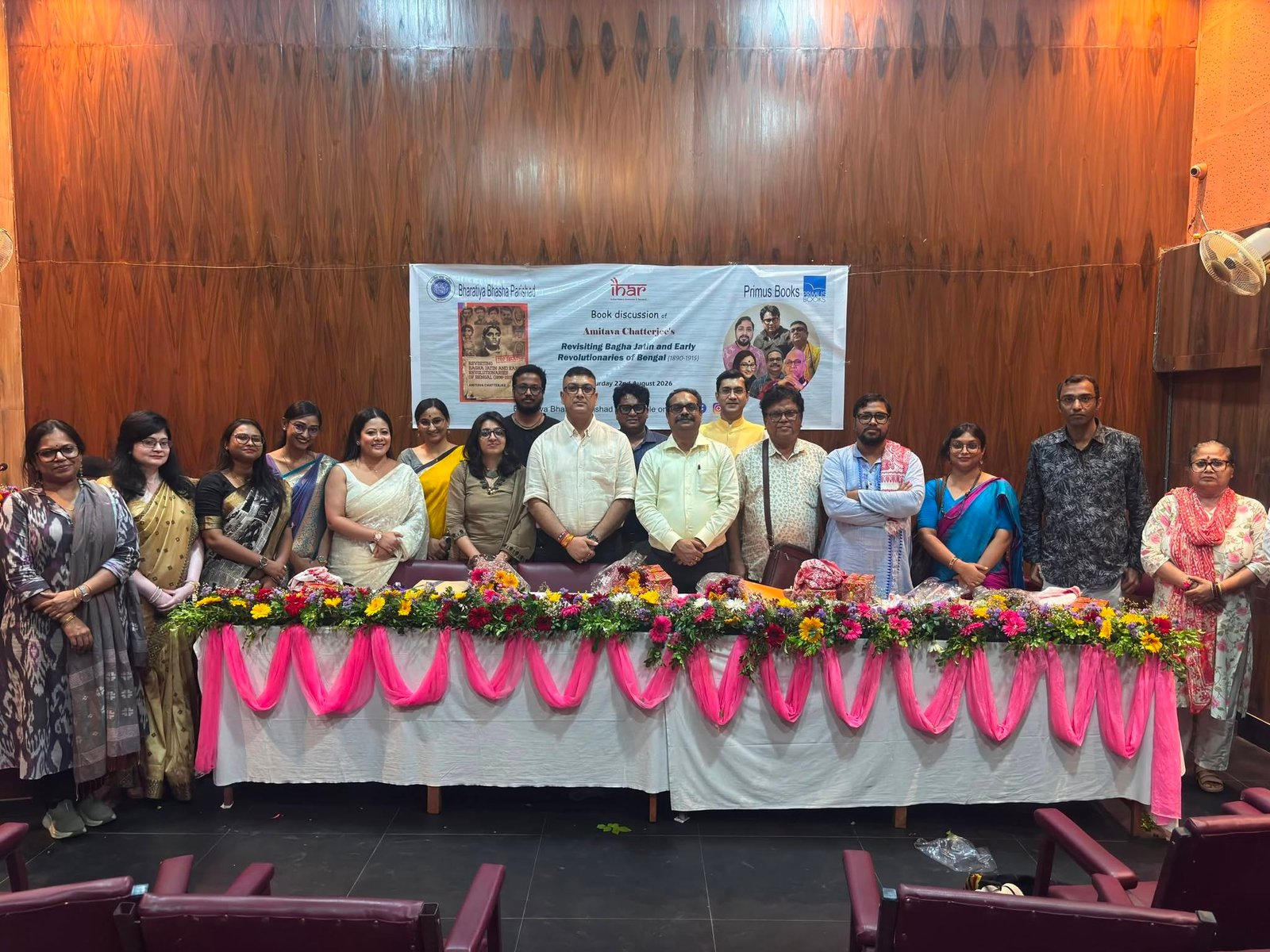
Panel Discussion: Heritage of Firebrand Revolutionaries – Bengal The Seedbed of Revolution

Published

on

Panelists & Moderators

Panelists : Rabi Ranjan Sen, Prasun Roy and Surya Sarathi Roy

Moderator : Moderator: Reetwika Banerjee

Event Report

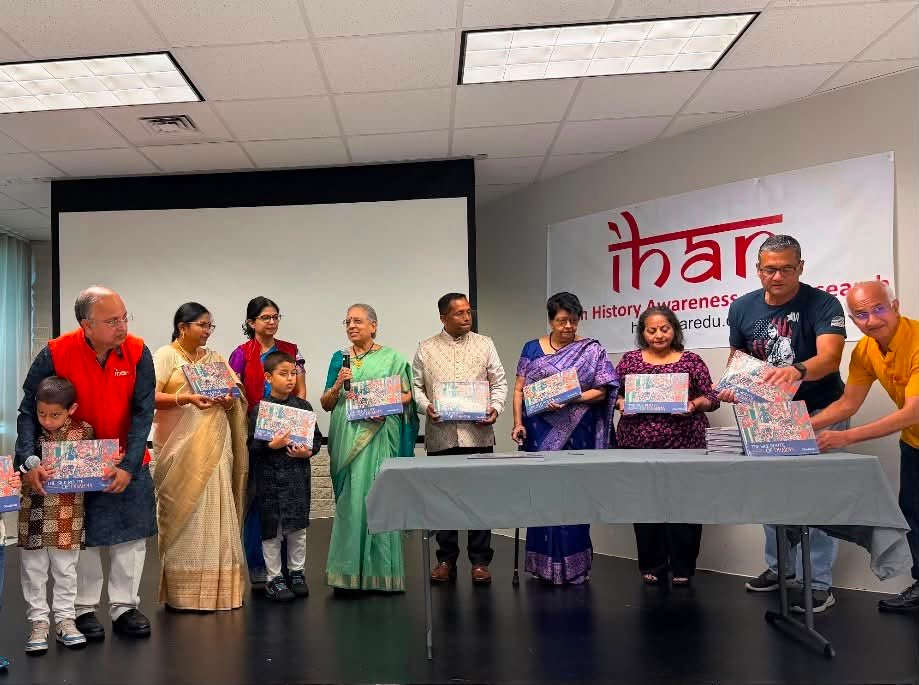
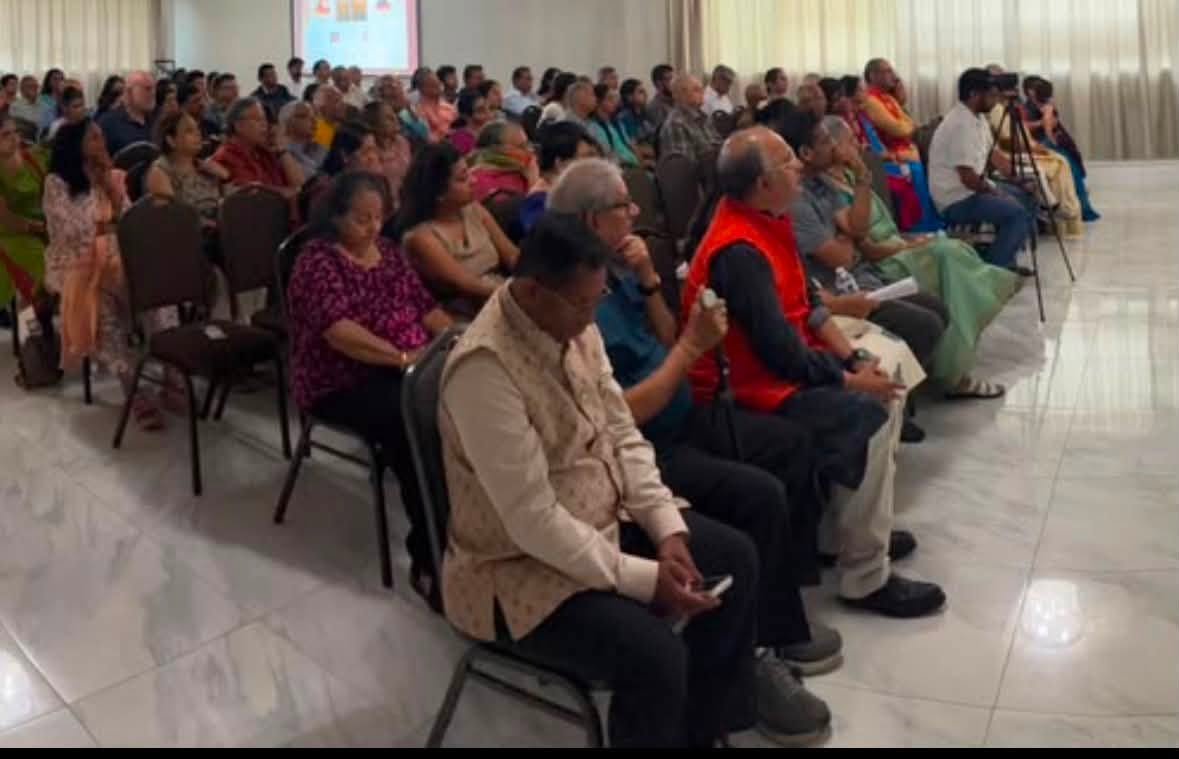
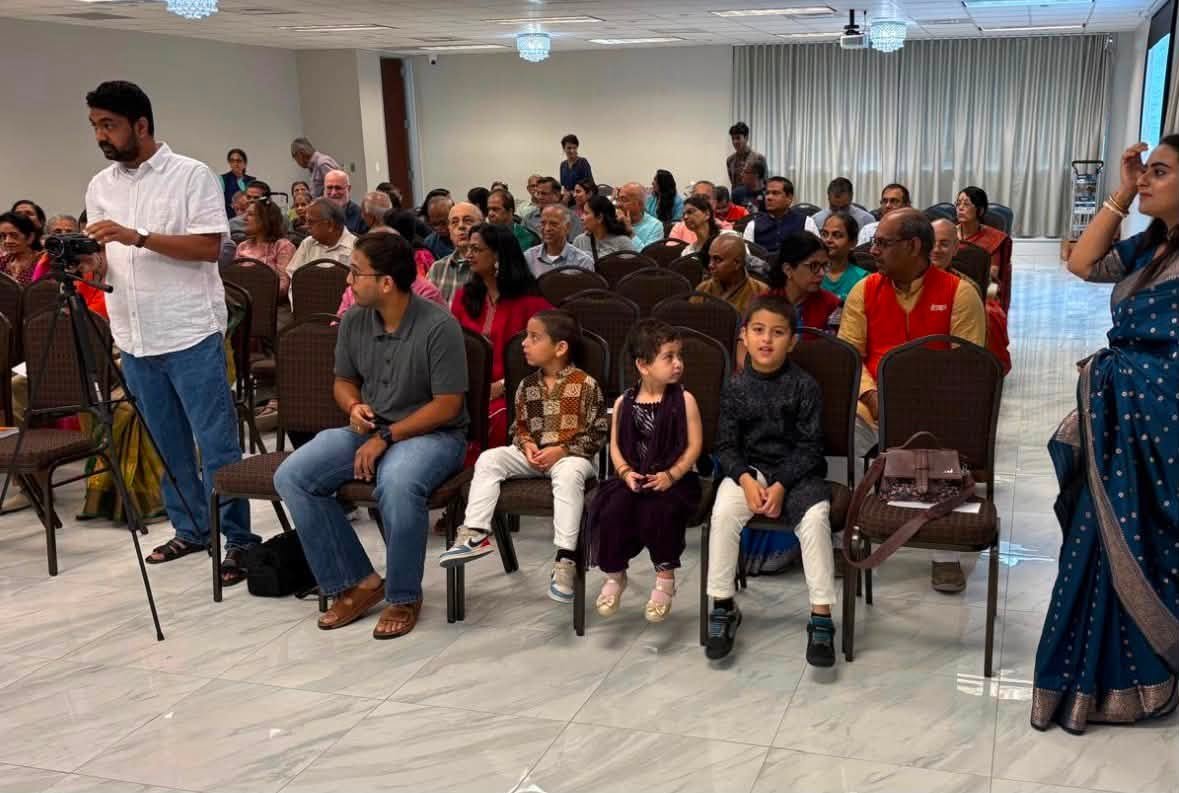
The fourth session of the Annual Conference discussed the role of the revolutionaries in undivided Bengal. Bengal was the land of various revolutionary activities. The panelists brought interesting facts and analysis regarding the revolutionary movement. Hundreds of freedom fighters from this region took up arms against the British colonial rule. That period is known as the Agniyug. They suffered imprisonment, were sentenced to transportation for life, and even hanged to death. Still, nothing could demotivate them from serving their motherland.

As per the popular opinion of a section of historians, India became independent because of the non-violent struggle led by Gandhiji. However, we cannot rule out the contribution of the revolutionaries. The revolutionaries created fear in the minds of the ruling class. Swami Vivekananda inspired the revolutionaries. He promoted football and wrestling. Netaji Subhas Chandra Bose was particularly inspired by him. Vivekananda had said in 1897 that the religion for the next fifty years should be ‘Purna Swaraj’. The revolutionaries followed the speeches and writings of Swamiji.

Apart from that, they were influenced by Bankim Chandra Chatterjee’s Anandmath and the literature of the Carbonaries of Italy and Irish revolutionaries. They engaged in Shakti worship and took oaths in the name of Gods and Goddesses. They studied the Bhagavad Gita and Upanishads alongside arms training. Spirituality was an integral part of the revolutionaries’ lives.

Some argue that because of this cultural and religious aspect, Muslims were alienated from the freedom struggle. However, the Muslim community was given many privileges since the 1920s by Gandhiji, Chittaranjan Das, and Netaji. Despite this, it could not stop the Partition of India and the creation of Pakistan. The first Partition of Bengal happened in 1905, which was annulled in 1911 after the Swadeshi Movement. However, the British Government moved the capital from Calcutta to Delhi in the wake of the tremendous activities of the revolutionaries.

Prasun Roy has authored a book on Rash Behari Bose, which shifted the discussion to him. Rash Behari Bose was a revolutionary who was an out-of-the-box thinker. He attempted to assassinate the Viceroy, Lord Hardinge, in Delhi, though the attempt was unsuccessful. Remarkably, the very next day, he attended the Viceroy’s party in Dehradun. After his cover was blown, he fled to Japan.

The culture of Japan greatly matched that of India. Rash Behari took efforts to create a narrative about India in Japan. He convinced the Japanese to establish an independent army that would fight alongside them in Southeast Asia. The Indian National Army (INA) was formed, and he selflessly handed over the reins of the force to Netaji. Unfortunately, Rash Behari could never return to India and died in Japan before the country attained independence. His contribution to the freedom struggle was immense, yet most people have forgotten him.

Though Bengal played a significant role in the freedom movement, it failed to properly acknowledge his role later on. After the country was partitioned on religious lines in 1947, Bengal lost two-thirds of its land. The apathy of the Bengali intellectuals to give rightful recognition to the revolutionaries after independence is largely responsible for this. As a result, Bengal, which was actively involved in the politics of British India, became an insignificant player in national politics post-independence.

Video

Events

IHAR participation in Doordarshan’s flagship Sanskrit news magazine show Vartavalli

Published

on

By

Dr. Mrittunjoy Guha Majumdar, IHAR Science Cell Head & Executive Member, was invited to speak on the exploration of the nature of reality from both scientific and Indian Knowledge Systems perspectives on Doordarshan’s flagship Sanskrit news magazine show Vartavalli. Prime Minister Narendra Modi has praised the show for its important role in promoting Indian culture and the Sanskrit language. In his talk, Dr. Guha Majumdar reflected on his intellectual journey and discussed key themes such as non-classical resonances within Advaita traditions, along with notable achievements in ancient Indian science and mathematics.
This marks Dr. Guha Majumdar’s third appearance on Doordarshan; a notable earlier feature included his documentary on quantum mechanics, ‘Chancing upon the Quantum’, produced under the Science India initiative.

Photos from the Event

Continue Reading

Events

IHAR participation in Shakthi Kumbh 2026

Published

on

By

Indian History Awareness and Research – IHAR had joined hands with the Shakti Khumb 2026 team as a knowledge partner, held in Odisha between 14 Feb – 21 Feb. The Shakti Khumb 2026 theme was based on Shakti, Bhakti, Prakriti & Shringar wherein the participants were provided with a wholesome experience around the theme through multiple workshops, lectures, temple visits, bhajans, Yoga, meditation, iconographic & architectural historiography of Odisha covering multifaceted aspects through the lens of Shri Jagannath Culture & it’s tapestry with the Shakti tattva, Natyashastra, Jayadeva’s Gita Govinda & a few more important literary texts. The icing on the Cake was the Rudrabhishekam on the Maha Shivaratri evening coupled with Shri Jagannath’s Mahaprasad Sevan. We sincerely thank the Shakti Khumb team for this spiritual & cultural engagement with the vision of the next Shakti Khumb in sight.

We share our deepest gratitude to Smt Nilima Bhat , Dr Usha Radhakrishna, Shri Bharat & Smt Neha from the Shakti Khumb team. We also take this opportunity to sincerely thank all the participants for their active participation & IHAR office holders Dr Adyasha Das & Dr Kumar Aurojyoti for their immense contributions. It was indeed exhilarating to see participants joining from Latin America & Europe & their avid interest in the Sanatan Sankriti.

Photos from the Event

Continue Reading

Events

Reviving Bengal’s Intellectual Heritage: IHAR West Bengal Chapter Undertakes Detailed Survey of Chaitanya Library in Kolkata

Published

on

By

Libraries have always played a vital role in shaping political sentiments and nurturing nationalist ideas in India. In Bengal, one of the most significant institutions that fostered political and revolutionary awakening during British rule was the Chaitanya Library, located in Kolkata.

Founded in 1889, the library’s founding members included eminent intellectuals such as Gaur Hari Sen, Kunj Behari Datta, and Rabindranath Tagore.

Situated on Beadon Street, right beside the historic Minerva Theatre, the Chaitanya Library still stands tall and imposing. Within its walls lies a treasure trove that transcends time and history. Sadly, years of neglect and fading memory have left this iconic institution in decline. Once home to more than one lakh books and magazines, the library is now in urgent need of attention—not only to protect its vast collection but also to preserve its tangible and intangible heritage.

With this concern in mind, the IHAR West Bengal Chapter recently conducted a survey visit to the library. The team will soon prepare a detailed report on the state of the Chaitanya Library and explore ways in which its treasures and legacy can be preserved for future generations.

Special thanks to Manideepa Basu, Mouli Roy, and Prof. Utkalika Sahoo, Bangabasi Evening College for their time and support in initiating this important step on behalf of IHAR West Bengal Chapter.

Photos from the Event

Continue Reading

Trending

Designed by ihar © 2025