Connect with us

articles

CARVING CONTINUITIES: THE LIVING HERITAGE OF SOAPSTONE ARTISANS

Published

on

Soapstone carving is a remarkable craft whose origins stretch back to some of the earliest civilizations in India. Today, this artistic tradition continues among communities whose heritage and skills have been passed down for many generations.

Historical Roots

Soapstone, a metamorphic rock primarily composed of talc, has been used in the Indian subcontinent since the days of the Indus-Saraswati Civilization and the Chalcolithic period. Its historical significance is evident in ancient sites where artifacts such as seals, beads, statues, and small figurines have been found. Key archaeological discoveries, like steatite ringstones from the Shunga-Maurya period and sculptures from the Gupta era, illustrate soapstone’s profound role throughout history. The artistry of temple construction, as seen in Khajuraho, Jabalpur, and Udaipur, is just one facet of the stone’s legacy, with temple artisans employing techniques and tools that are still in use by contemporary soapstone carvers.

Community and Continuity

Carving skills within artisan communities—particularly the Silawat and Vishwakarma—are shared orally and inherited over generations, often spanning four to five generations. Despite the richness of these traditions, written documentation remains scattered and incomplete, making oral testimonies vital in preserving the craft’s continuity. Migration patterns have also contributed to the dispersion and evolution of carving techniques among artisans.

Diversity of Soapstone Craft

The types of sculptures crafted by soapstone artisans are diverse, shaped by regional demands and socio-economic conditions. These range from modern decorative pieces to ritualistic art:

– In Jabalpur (Madhya Pradesh), artisans produce devotional and decorative items such as cookware, toys, and showpieces, with motifs including Shivlings, demigods, elephants, and birds. Soapstone for these works is typically sourced from mines near Bhedaghat.

– The Jhabua-Alirajpur region is known for traditional Gaata sculptures crafted in a relief style, often created in memory of deceased males and worshipped with offerings. Local mines, as well as sources in Gujarat and Rajasthan, supply the necessary soapstone.

– Udaipur’s artisans have adapted to high tourist demand, blending traditional motifs with contemporary designs. Lord Ganesh idols, abstract human figures, and various souvenirs showcase the community’s ability to innovate while maintaining cultural resonance.

Methods and Techniques

Soapstone carving is a collaborative and systematic process :

– Artisans begin with the selection and cutting of raw soapstone using cutters.

– Shaping is performed with hammers and chisels to form the sculpture’s basic structure.

– Fine chisels refine features, while detailing is achieved with pointed tools for intricate patterns.

– Female artisans often smoothen the finished sculptures using sandpaper and water, ensuring a flawless texture.

– Final touches, such as polishing and coloring, are applied with waterproof primers, oil-based substances, or spray paints for gloss and durability.

Cultural Significance and Challenges

The living heritage of soapstone carving continues to hold deep cultural value, maintaining links between the artisans of central and western India since the Bronze Age. Knowledge is primarily transmitted orally, but today faces threats from the rise of mechanization and waning interest among younger generations. Seasonal changes in tourism and market access impact sales, though affordable raw material provides some relief.

The Way Forward

There is an urgent need to recognize, support, and safeguard soapstone artisans to preserve this craft for future generations. Without such efforts, a vital aspect of India’s creative and spiritual history risks fading away. By understanding and promoting the work of these artisans, society can ensure the survival of this unique and profound tradition.

articles

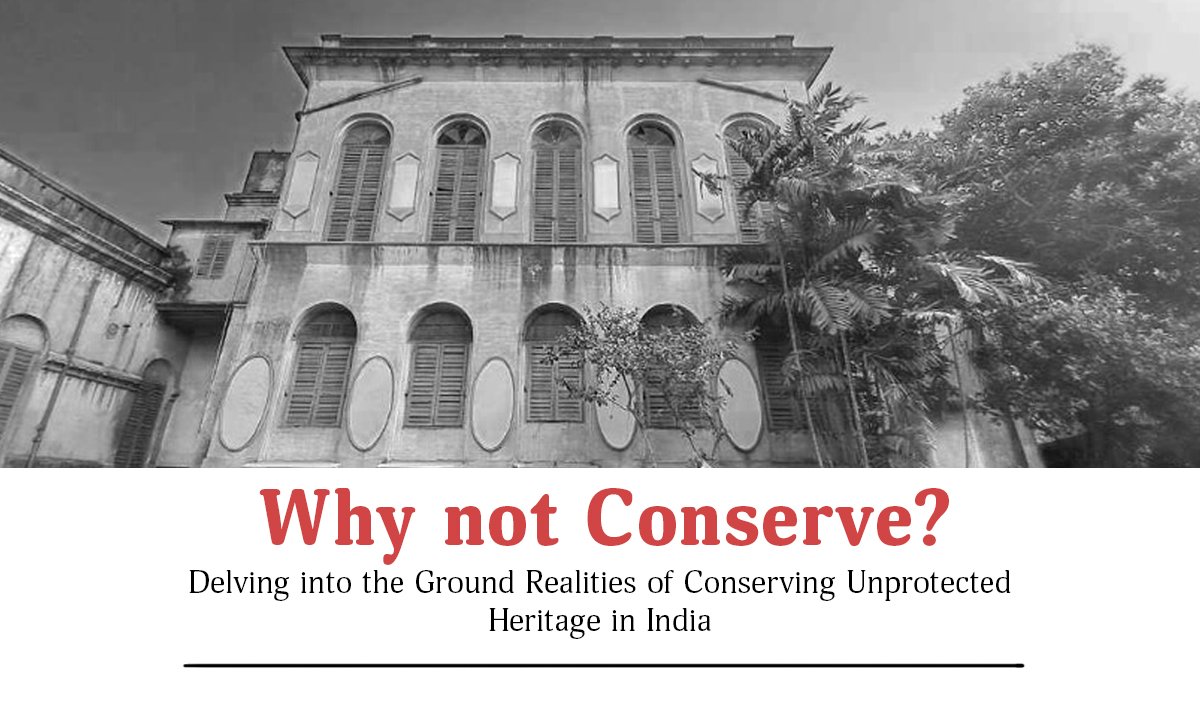
Why not Conserve? Delving into the Ground Realities of Conserving Unprotected Heritage in India
Published

on

By

About the Article Author - Protyoy Sen

Protyoy Sen is an architect, currently pursuing his Masters in Building Conservation at the Welsh School of Architecture, Cardiff University. Having graduated from CEPT University Ahmedabad in 2023, his primary interest lies in the tangible values of conserving heritage, incentivisation for its stakeholders, and aligning conservation with broader goals of urban planning and sustainability. He believes that the potential of heritage in creating a rooted economy is currently underutilised in India, and attributes his passion to the architectural legacy of his hometown, Calcutta. His earlier research delved into the practical challenges of conserving heritage buildings, and its quantifiable benefits for the society.

Protyoy also has over two years of experience in the industry, having worked with Indian heritage bodies such as INTACH and DRONAH. His work, during this time, included projects with private clients, Archaeological Survey of India (ASI), and State Archaeology and Tourism departments.

Continue Reading

articles

Prayagraj and Its Sacred Glory (Prayāga Māhātmya)

Published

on

By

About the Article Author - Jitendra Tiwari

Jitendra Tiwari is a committed educator and cultural practitioner devoted to the service of Bharat through the revival and application of its eternal civilizational wisdom. His work consciously integrates education, heritage conservation, and sustainable rural development, aiming to harmonize tradition with meaningful service to society.

He served for five years as Headmaster at Govardhan Gurukul, Govardhan Eco Village, where he was deeply involved in value-based education, character formation, and community development initiatives. At present, he teaches Mathematics and English at a Gurukul in Parmanand Ashram, Prayagraj. His teaching journey—spanning Prayagraj and earlier experience in Mumbai—has strengthened his resolve to nurture disciplined, holistic learning among students, shaping them into responsible future leaders of society and the nation.

Through the Sri Adishankaracharya Foundation, he actively works to promote Panchgavya-based organic farming, cow protection, farmer and artisan empowerment, and digital documentation of Bharat’s rich heritage. He also curates heritage walks in Prayagraj and develops educational modules and guidebooks grounded in the region’s sacred history and cultural legacy.

Deeply inspired by the teachings of great Acharyas—especially Jagadguru Shankaracharya Swami Nishchalanand Saraswati Maharaj—Jitendra Tiwari views his life’s work as a humble offering toward the protection, propagation, and lived practice of Bharat’s cultural and spiritual heritage.


Continue Reading

articles

Sangam and Kumbh Mela in Bengal: The Sacred Legacy of ‘Dakshin Prayag’ Tribeni

Published

on

By

About the Article Author - Pallab Mondal

Pallab Mondal is an independent researcher and columnist with a keen interest in cultural and social issues. A committed cultural and social activist, his work focuses on engaging with society through research, writing, and grassroots perspectives. He holds an MA in Social Work from Rabindra Bharati University, which informs his analytical approach and active involvement in social and cultural discourse.


Continue Reading

Trending

Designed by ihar © 2025