Connect with us

articles

CARVING CONTINUITIES: THE LIVING HERITAGE OF SOAPSTONE ARTISANS

Published

on

Soapstone carving is a remarkable craft whose origins stretch back to some of the earliest civilizations in India. Today, this artistic tradition continues among communities whose heritage and skills have been passed down for many generations.

Historical Roots

Soapstone, a metamorphic rock primarily composed of talc, has been used in the Indian subcontinent since the days of the Indus-Saraswati Civilization and the Chalcolithic period. Its historical significance is evident in ancient sites where artifacts such as seals, beads, statues, and small figurines have been found. Key archaeological discoveries, like steatite ringstones from the Shunga-Maurya period and sculptures from the Gupta era, illustrate soapstone’s profound role throughout history. The artistry of temple construction, as seen in Khajuraho, Jabalpur, and Udaipur, is just one facet of the stone’s legacy, with temple artisans employing techniques and tools that are still in use by contemporary soapstone carvers.

Community and Continuity

Carving skills within artisan communities—particularly the Silawat and Vishwakarma—are shared orally and inherited over generations, often spanning four to five generations. Despite the richness of these traditions, written documentation remains scattered and incomplete, making oral testimonies vital in preserving the craft’s continuity. Migration patterns have also contributed to the dispersion and evolution of carving techniques among artisans.

Diversity of Soapstone Craft

The types of sculptures crafted by soapstone artisans are diverse, shaped by regional demands and socio-economic conditions. These range from modern decorative pieces to ritualistic art:

– In Jabalpur (Madhya Pradesh), artisans produce devotional and decorative items such as cookware, toys, and showpieces, with motifs including Shivlings, demigods, elephants, and birds. Soapstone for these works is typically sourced from mines near Bhedaghat.

– The Jhabua-Alirajpur region is known for traditional Gaata sculptures crafted in a relief style, often created in memory of deceased males and worshipped with offerings. Local mines, as well as sources in Gujarat and Rajasthan, supply the necessary soapstone.

– Udaipur’s artisans have adapted to high tourist demand, blending traditional motifs with contemporary designs. Lord Ganesh idols, abstract human figures, and various souvenirs showcase the community’s ability to innovate while maintaining cultural resonance.

Methods and Techniques

Soapstone carving is a collaborative and systematic process :

– Artisans begin with the selection and cutting of raw soapstone using cutters.

– Shaping is performed with hammers and chisels to form the sculpture’s basic structure.

– Fine chisels refine features, while detailing is achieved with pointed tools for intricate patterns.

– Female artisans often smoothen the finished sculptures using sandpaper and water, ensuring a flawless texture.

– Final touches, such as polishing and coloring, are applied with waterproof primers, oil-based substances, or spray paints for gloss and durability.

Cultural Significance and Challenges

The living heritage of soapstone carving continues to hold deep cultural value, maintaining links between the artisans of central and western India since the Bronze Age. Knowledge is primarily transmitted orally, but today faces threats from the rise of mechanization and waning interest among younger generations. Seasonal changes in tourism and market access impact sales, though affordable raw material provides some relief.

The Way Forward

There is an urgent need to recognize, support, and safeguard soapstone artisans to preserve this craft for future generations. Without such efforts, a vital aspect of India’s creative and spiritual history risks fading away. By understanding and promoting the work of these artisans, society can ensure the survival of this unique and profound tradition.

articles

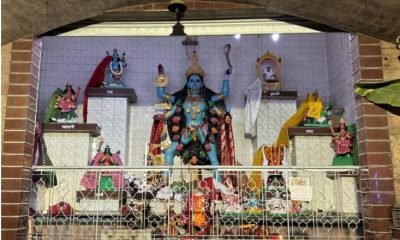
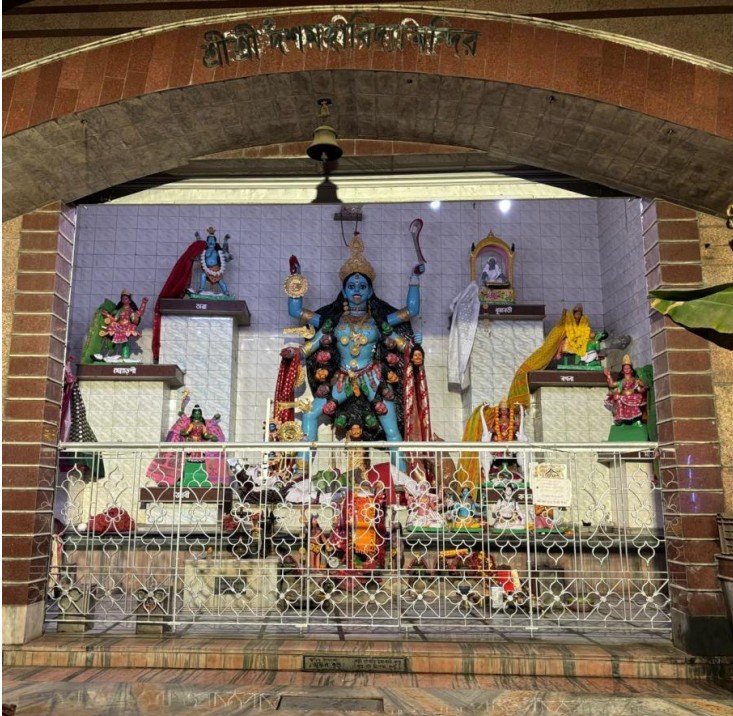
The Trail of Omkari : A Spiritual Corridor of Bangla Shaktipeeths

Published

on

By

About the Article Author - Dr. Mrittunjoy Guha Majumdar

Dr. Mrittunjoy Guha Majumdar, Chair – IHAR Science Committee, is an Adjunct Professor at the National Institute of Advanced Studies Bengaluru and Assistant Professor at Amrita Vishwavidyapeetham, Delhi NCR. Having completed his doctorate from Cavendish Laboratory at the University of Cambridge, he has been an institutional postdoctoral fellow at Harvard University, a senior postdoctoral researcher at the Indian Institute of Science – Bangalore (funded by the Office of the Principal Scientific Advisor to the Government of India) and a postdoctoral associate of Nobel Laureate (Physics, 1973) Prof. Brian Josephson at the University of Cambridge. He has been a Trinity Barlow Scholar (2015-2018), Nehru Scholar (2014-2018), INSPIRE Scholar (2011-2014) and TIFR NIUS Fellow (2012-2014). He was a lead speaker in the domain of quantum error correction at the National Quantum Mission (NQM) strategic consultation meeting in July 2023. His area of research expertise is in entanglement, quantum information and the foundations of quantum physics. He has had training in Artificial Intelligence from the MIT Schwarzmann School of Computing, with one of his recent research focus-areas being Quantum Machine Learning (QML). Dr. Guha Majumdar has previously worked with the Ministry of Human Resource Development (Government of India), UNESCO and G20 on education and science policy. He has also been a science communicator, with his documentary on quantum mechanics aired on Doordarshan, under the Science India initiative. His book ‘From Shiva to Schrödinger’, published by the Penguin Randomhouse group, has been a bestseller. He is the national convenor of Mandala, that intends to bridge contemporary science and Indic thought, in a rigorous and self-consistent manner, at the ontological as well as the epistemological and normative levels.

Continue Reading

articles

Dokra: Folk art of west Bengal

Published

on

By

About the Article Author - Prof. Utkalika Sahoo

Utkalika Sahoo is an Assistant professor at Bangabasi Evening College. Earlier, she has been teaching at Naihati RBC Women’s College since 2010.She did her Masters in History from Jadavpur University and MPhil in the Department of International Relations from Jadavpur University. Currently, she is doing her PhD in the Department of Modern History from Calcutta University. Her PhD topic is Partition Literature. She gives NET SET coaching at Kalyani University. She has written more than 30 articles and books. She also writes articles in foreign newspapers.

Continue Reading

articles

Exploring the Buddha’s Relics: IHAR at Rai Pithora Quila

Published

on

The Indian History Awareness and Research (IHAR) team recently visited the Rai Pithora Quila complex, which is currently hosting a significant exhibition focused on the Pipirawaha discoveries associated with the Buddha’s relics and precious gems. This exhibition marks a landmark initiative by the Ministry of Culture, as it brings together, for the first time, key inventories from both the Indian Museum, Kolkata, and the National Museum, New Delhi.

The central attraction of the exhibition is the Pipirawaha relics and gemstones, presented alongside a detailed archaeological and historical narrative. Visitors are able to understand not only the importance of these relics but also the story of their discovery, excavation, and interpretation over time. The use of high-quality digital displays and archaeological reconstructions makes the presentation engaging and easy to follow for both scholars and the general public.

A major highlight of this exhibition is the collaboration between the Indian Museum and the National Museum. Objects that were earlier displayed separately have now been brought together in a single space, allowing for a more complete understanding of early Buddhist material culture. IHAR expresses its sincere appreciation to Dr Sayan Bhattacharya, Director, Indian Museum for his valuable inputs, which played an important role in making this collaboration possible.

The exhibition also showcases, for the first time in this setting, a wide range of Buddhist iconography and tablets from the National Museum’s collection. These objects demonstrate the development of Buddhist art and symbolism across different periods and regions. Among the most important displays is the famous Nalanda Inscription, which highlights Nalanda’s role as a major centre of learning and its connections with the wider Buddhist world.

Another important aspect of the exhibition is its focus on India’s maritime links with Southeast Asia. Through inscriptions, artefacts, and explanatory panels, the exhibition explains how Buddhist ideas, art forms, and traditions travelled from India to regions such as Southeast Asia via sea routes. This section helps visitors understand Buddhism as a dynamic and expansive tradition shaped by trade, travel, and cultural exchange.

The display of Pala-era manuscripts is another major attraction. These manuscripts include important Buddhist texts, especially versions of the Prajñāpāramitā, and reflect the scholarly and spiritual vibrancy of eastern India during the Pala period. Their inclusion adds a strong intellectual and philosophical dimension to the exhibition, complementing the archaeological displays.

Overall, the exhibition at Rai Pithora Quila presents a well-balanced and thoughtful account of India’s Buddhist heritage. It successfully combines relics, inscriptions, manuscripts, iconography, and digital tools to offer visitors a clear and meaningful understanding of Buddhism’s historical journey within India and beyond.

The IHAR team greatly appreciated the effort taken to present complex historical material in an accessible manner. The exhibition stands out as a model for collaborative museum practice and public history in India.

IHAR is especially proud of the outstanding contribution of its Executive Member, Dr Abira Bhattacharya (Deputy Director Buddhist Gallery, National Museum), whose dedication and expertise played a crucial role in conceptualising and organising this exhibition. Her work reflects IHAR’s broader mission of promoting informed historical research and making India’s rich past accessible to wider audiences.

Continue Reading

Trending

Designed by ihar © 2025