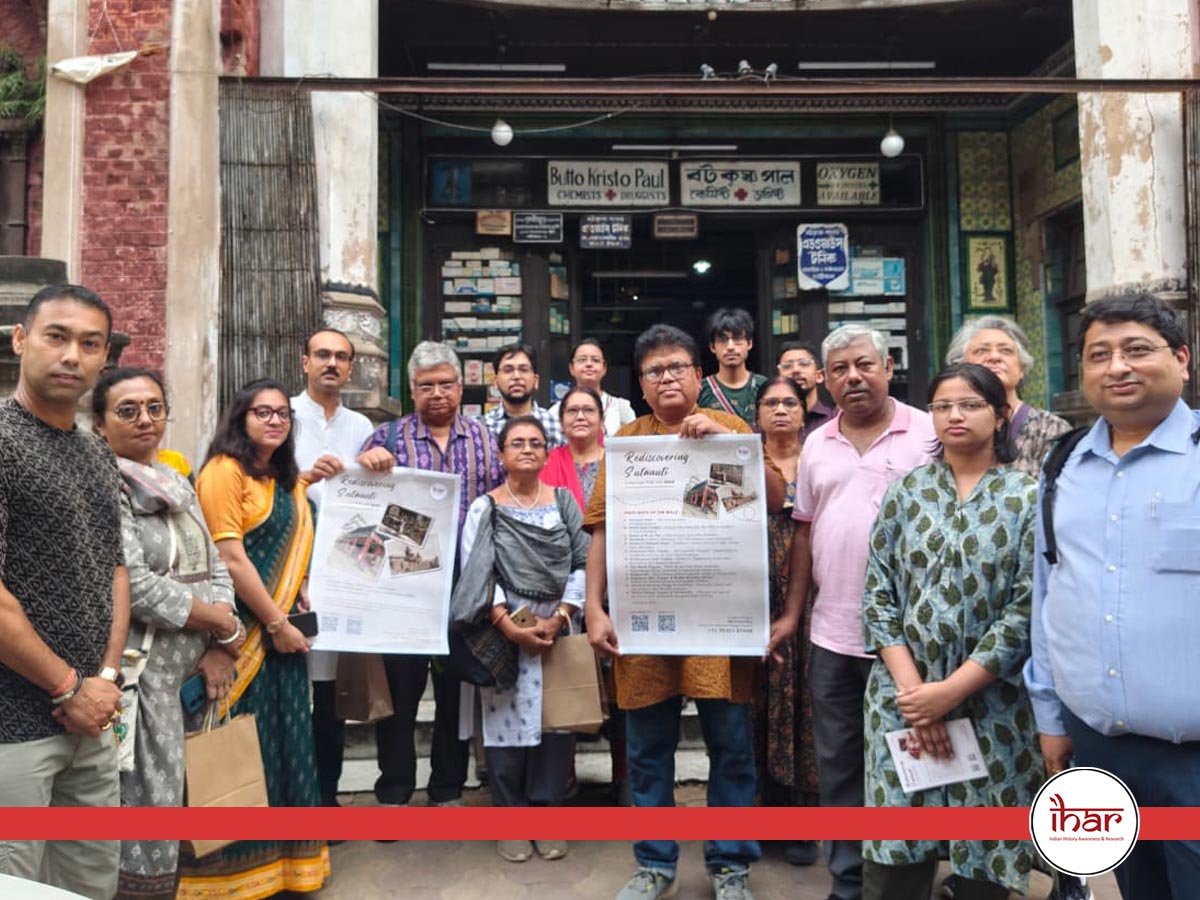
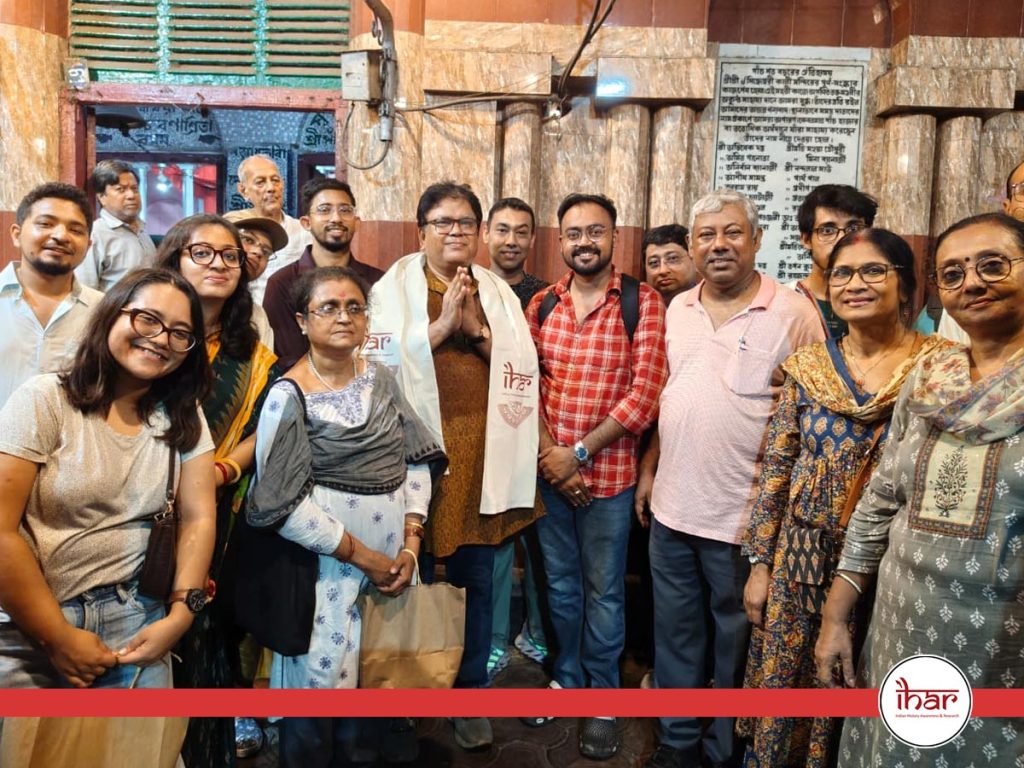
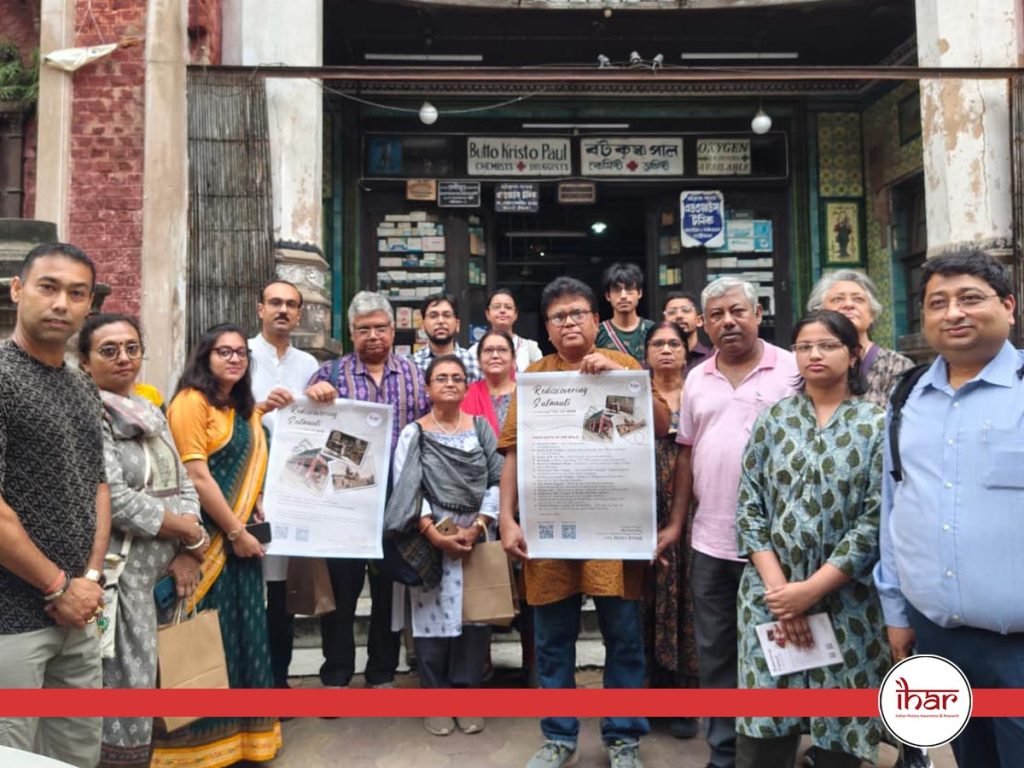
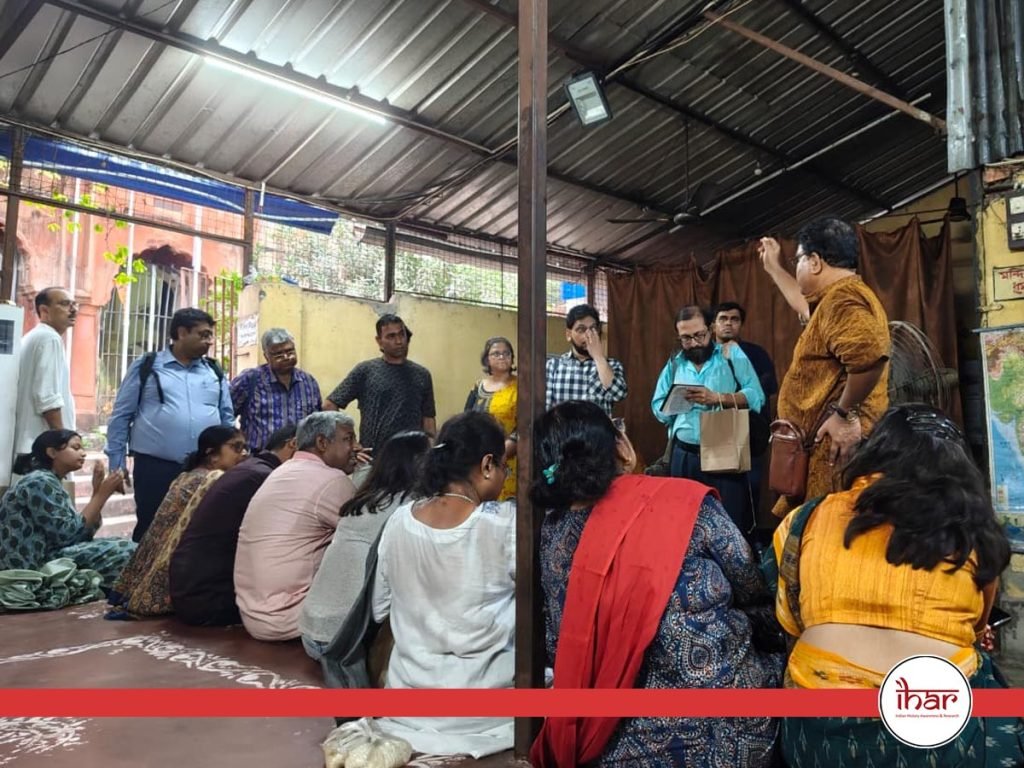
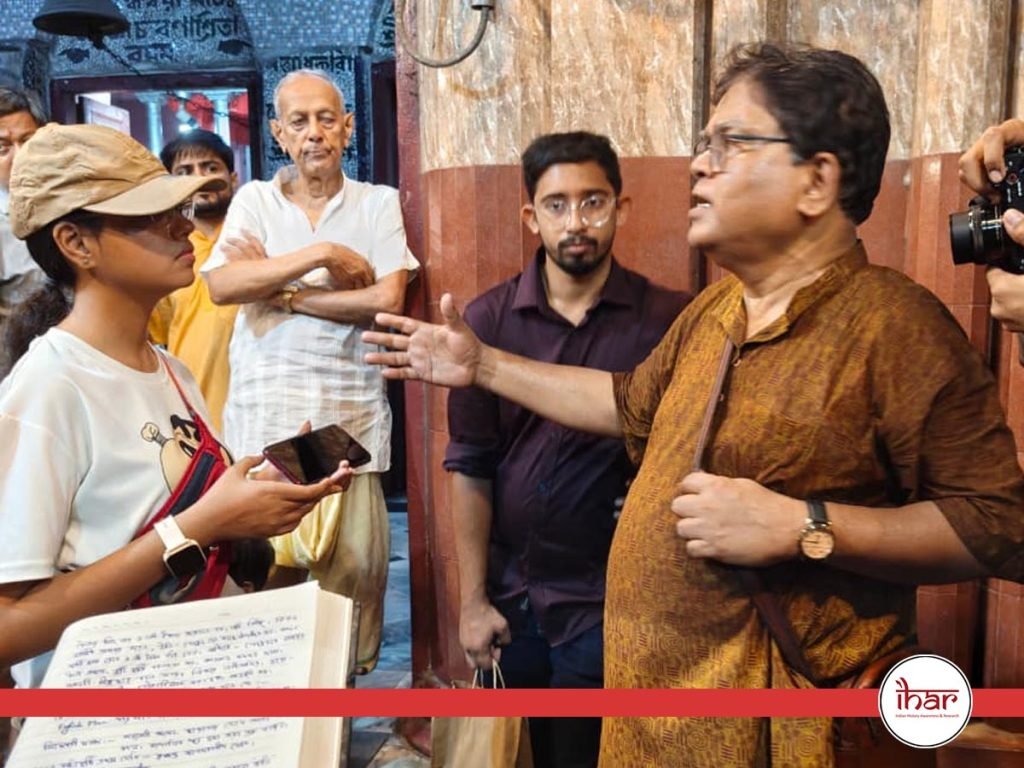
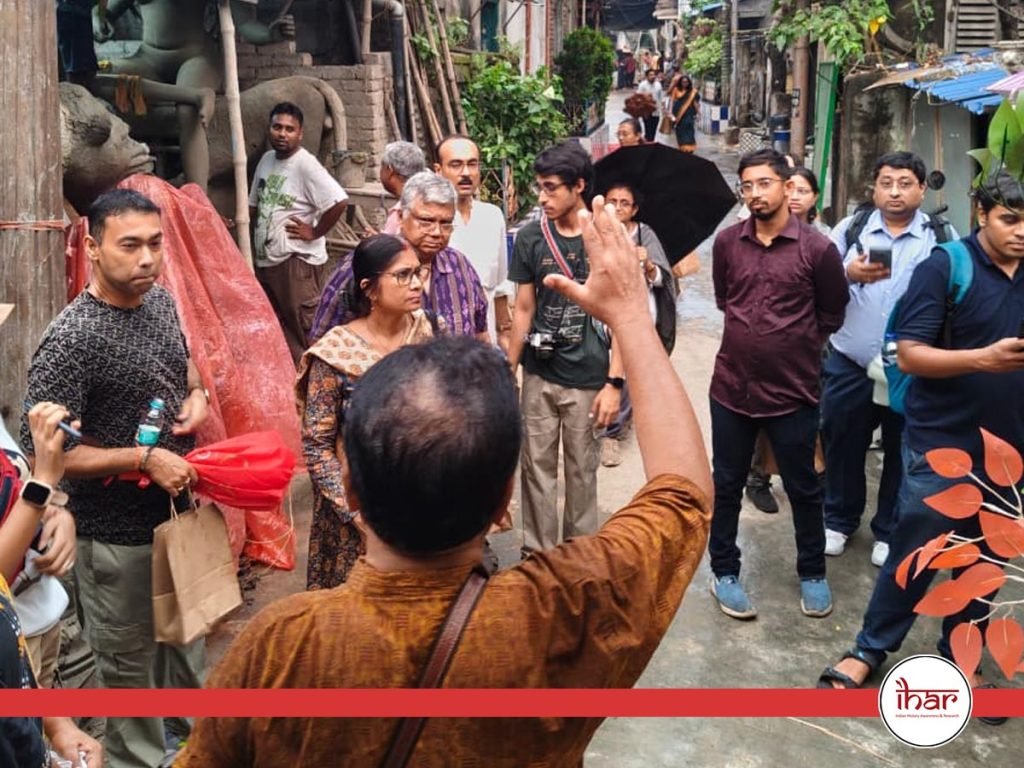
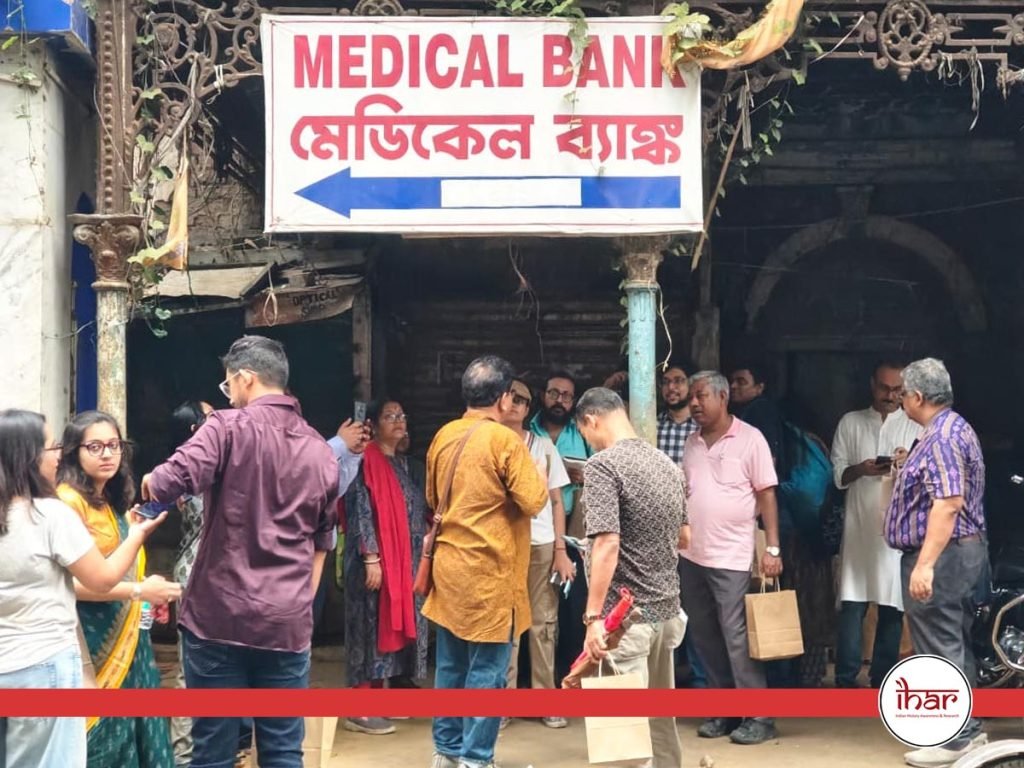
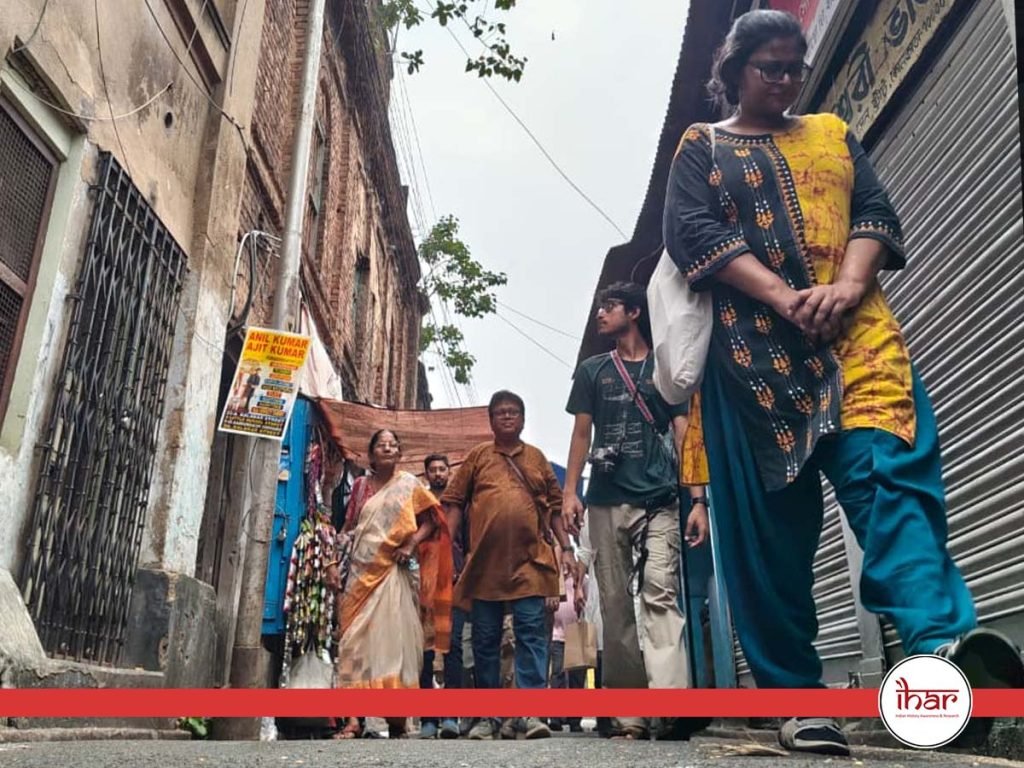
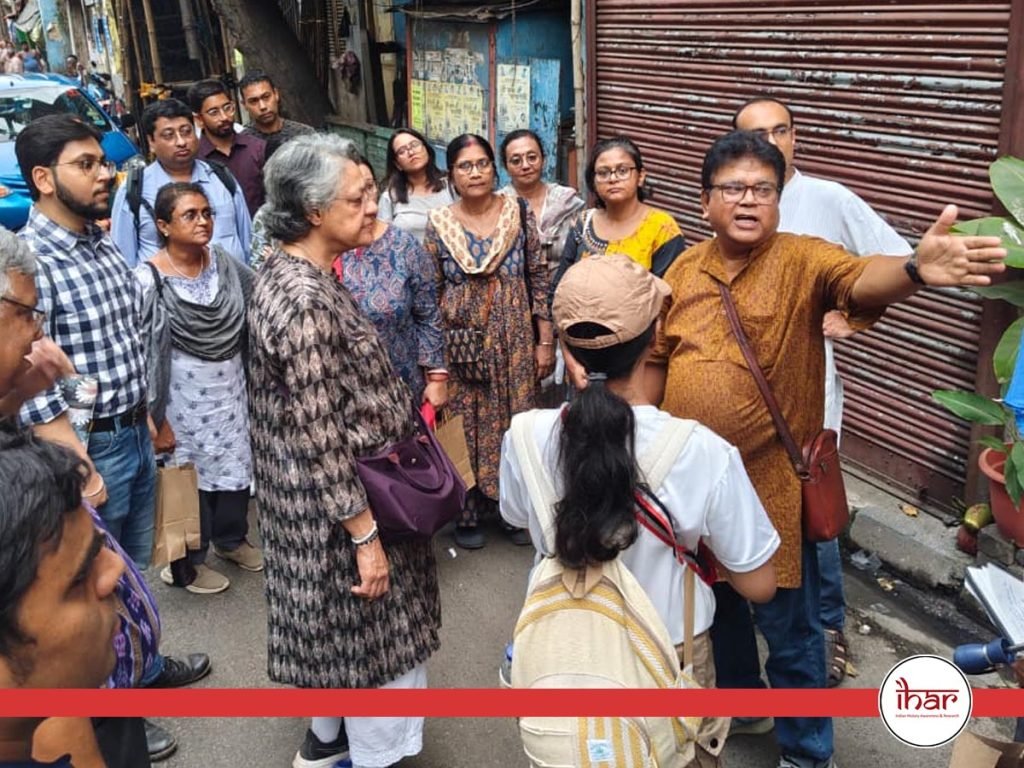
On Sunday, October 26, 2025, the organization Indian History Awareness and Research (IHAR) embarked on its inaugural heritage walk, titled “Rediscovering Sutanuti.”
Dedicated to the study, research, preservation, and public awareness of Indian history, IHAR has long aimed to connect people with the layers of India’s historical and cultural legacy. This heritage walk marked a significant step in that direction.
Why Sutanuti?
The choice of Sutanuti as the focus of IHAR’s first heritage walk was profoundly symbolic.
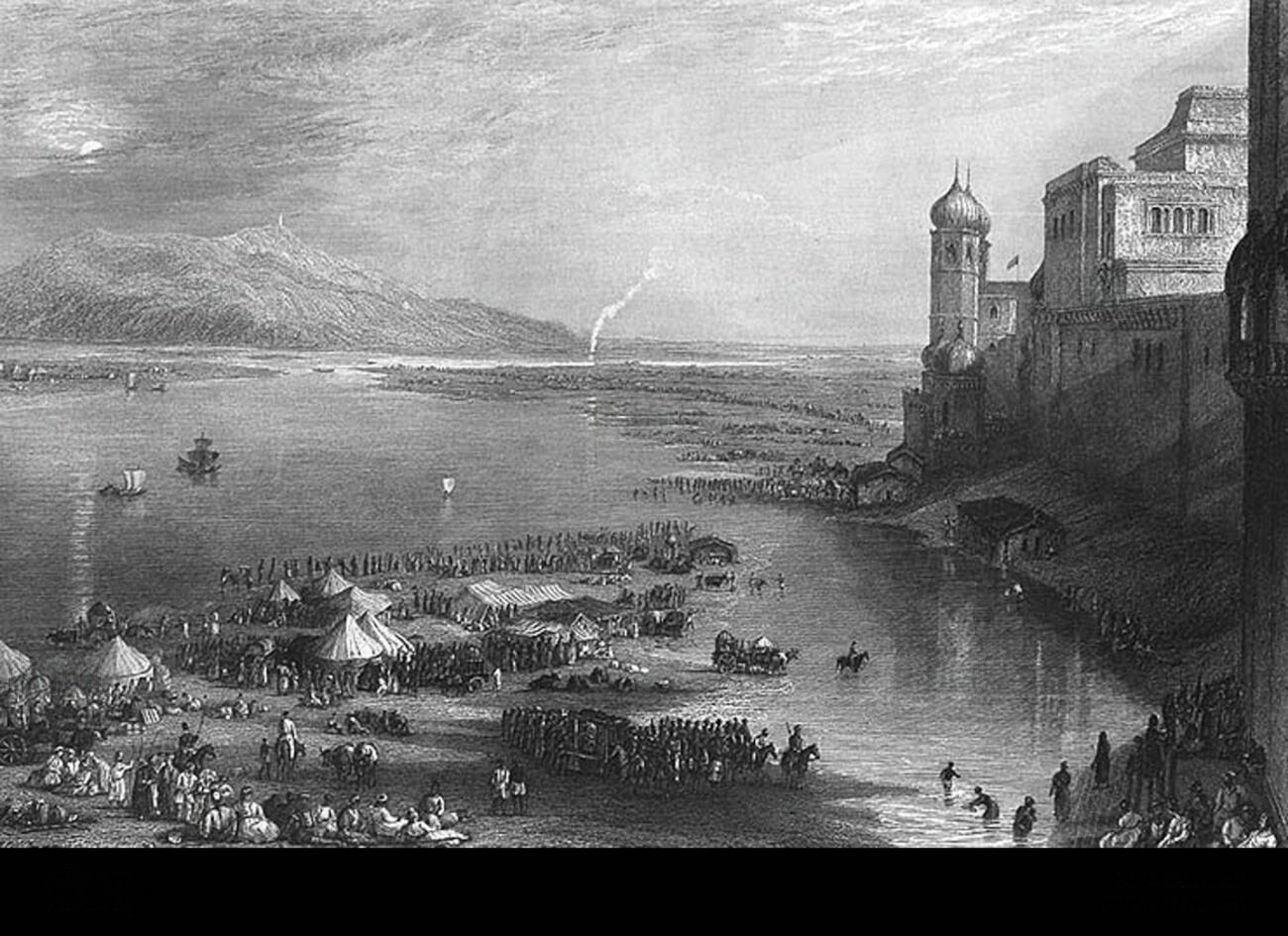
It was here, on August 24, 1690, that Job Charnock, an officer of the East India Company, is believed to have landed—a moment that would reshape the destiny of Bengal and, indeed, the entire Indian subcontinent.
Although the Company had visited Sutanuti earlier, it was this arrival that initiated a chain of events culminating in nearly two centuries of colonial rule, lasting until August 14, 1947.
On November 10, 1698, the East India Company entered into an agreement with the Sabarna Roy Chowdhury family, acquiring the zamindari (lease rights) of three villages—Kalikata, Govindpur, and Sutanuti—for an annual rent of ₹1300.
This agreement laid the foundation for the rise of Calcutta, though Charnock himself never witnessed it, having passed away in 1693.
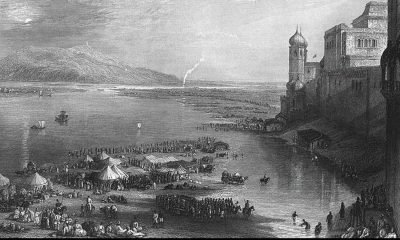
Over 335 years later, the Sutanuti of 1690 and that of 2025 appear worlds apart.
Historians still debate the precise locations of Sutanuti Ghat, where Charnock’s ship is believed to have anchored, and Sutanuti Haat, the bustling market once held twice a week for the sale of cotton yarns and threads.
It was this very market that enriched the Seths and Basaks, the early inhabitants of Calcutta, through the textile trade.
Though no physical trace of that port or market survives today, scholars generally agree that Sobhabazar corresponds to the original Sutanuti region.
Accordingly, IHAR chose this locality for its first heritage walk—a symbolic return to the city’s historical roots.
The legacy of Sutanuti lives on in names like Haatkhola (“the open market”), a term derived from the old marketplace and still preserved in local designations such as Haatkhola Post Office.
Similarly, through the efforts of Sutanuti Parishad, the Sobhabazar Metro Station was officially renamed “Sobhabazar Sutanuti.”
Even in the absence of the old market, these surviving names echo the deep emotional and cultural resonance Sutanuti continues to hold for the people of Calcutta and Bengal.
⸻
Highlights of the Walk
The heritage walk took participants on a journey through Sutanuti’s remaining landmarks and forgotten corners, each revealing a fragment of Calcutta’s layered past.
B. K. Pal’s House
The first stop was the residence of B. K. Pal, the pioneering Bengali manufacturer and seller of medicines in the 19th century.
His most celebrated creation, Edward Tonic (1887), became a household remedy for fevers and stomach ailments—common and often fatal in colonial Calcutta—earning him a lasting place in Bengal’s medical history.
Shwet Kali Temple
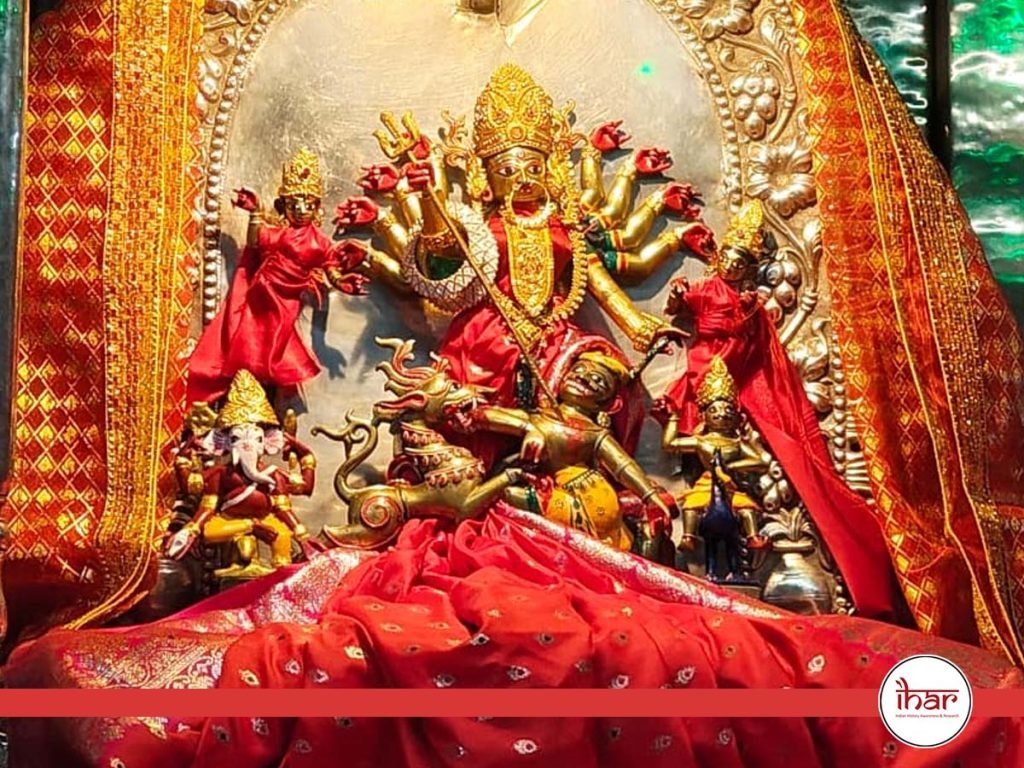
Participants then visited the Shwet Kali Temple on Sobhabazar Street, nearly 300 years old and among the three oldest white Kali temples in Bengal.
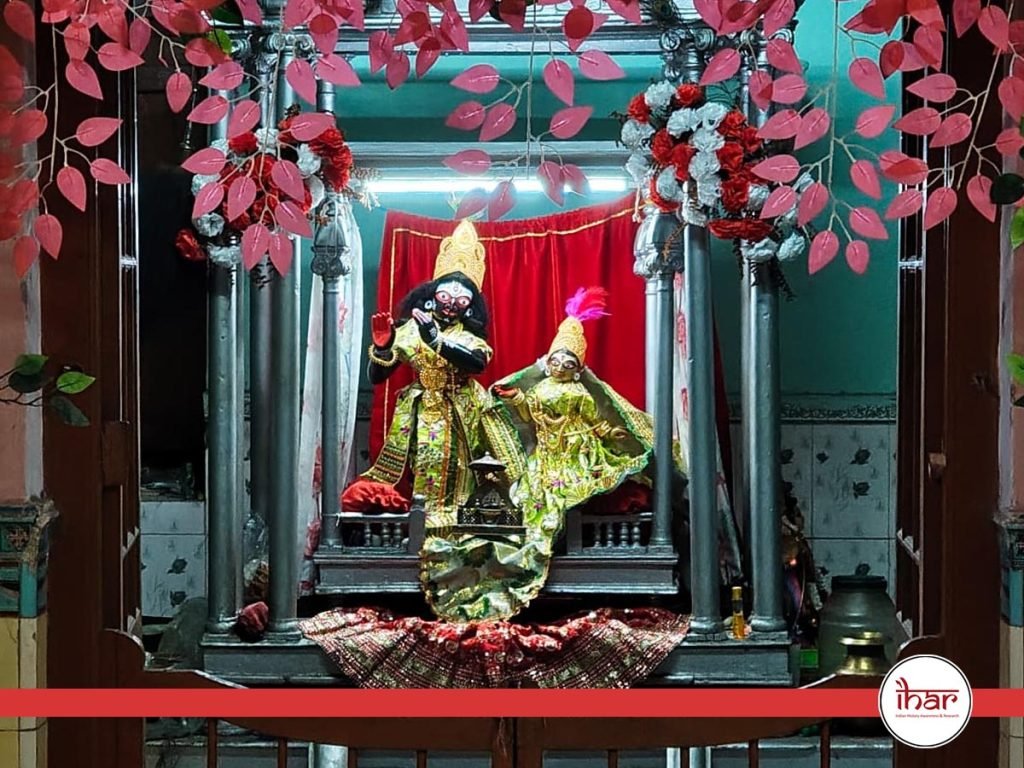
Originally a shrine for dacoits, it later became a site of domestic worship. The deity here is distinctive—white in color, two-armed, tongue inside the mouth, and standing over Virupaksha and Kalbhairav, without the usual garland of severed heads.
Raja Janakinath Ray’s Mansion
The walk next stopped at the grand mansion of Raja Janakinath Ray of the Bhagyakul Ray family, prosperous traders from Dhaka and Calcutta.
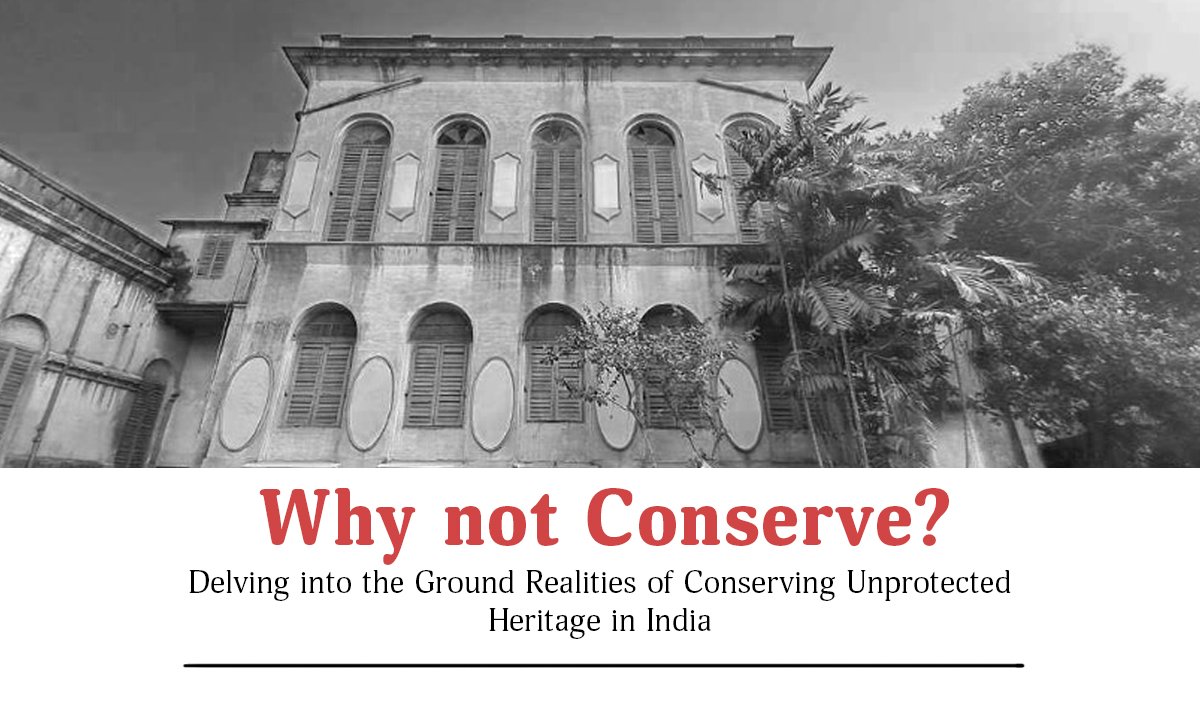
Built in the 19th century, a part of this palatial building now serves as the Jorabagan Traffic Guard office, while descendants of the Ray family still occupy another section.
Chitpur Road (Rabindra Sarani)
Participants then walked along Chitpur Road, now Rabindra Sarani, regarded as Calcutta’s oldest road, dating back nearly 500 years.
Originally extending from Chitpur to Kalighat and later to Halisahar, the path once cut through dense forests inhabited by wild animals and robbers—an incredible contrast to today’s bustling thoroughfare.
Rameshwar Shiva Temple
Next came the Rameshwar Shiva Temple, built around 1700 by Nandaram Sen, the first native tax collector under the British official Mr. Sheldon.
Standing 80 feet tall, the temple mirrors the Aatchala style of the Kalighat Kali Temple and houses a six-foot-high Shivalinga.
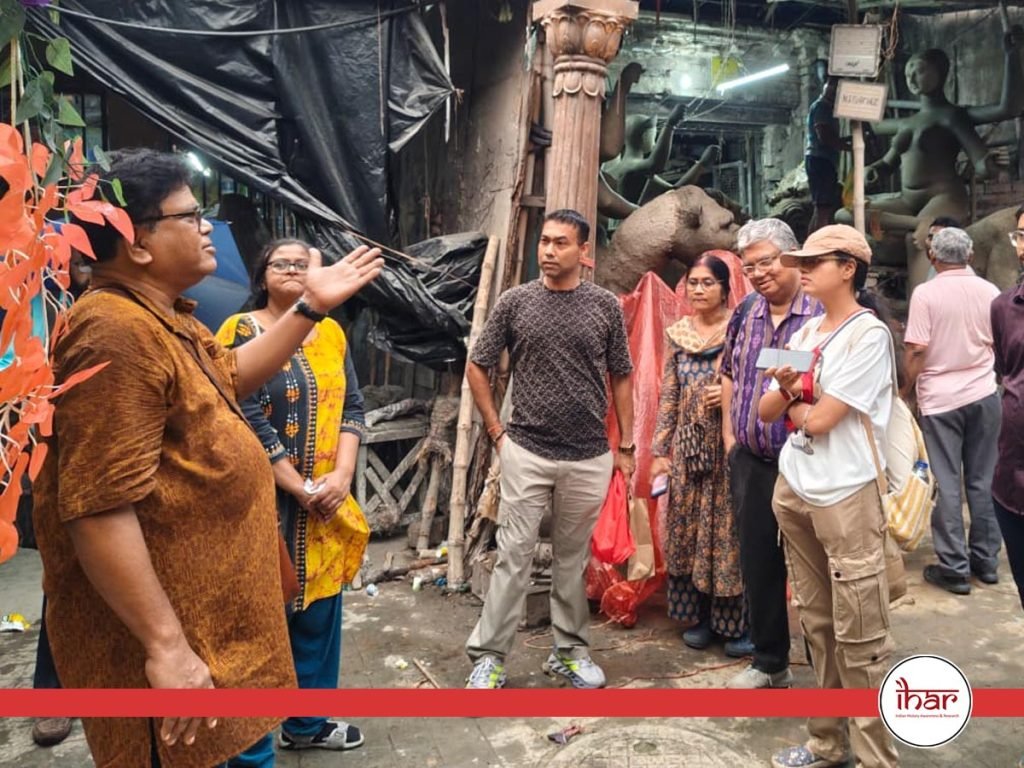
Kumartuli and the Artisans
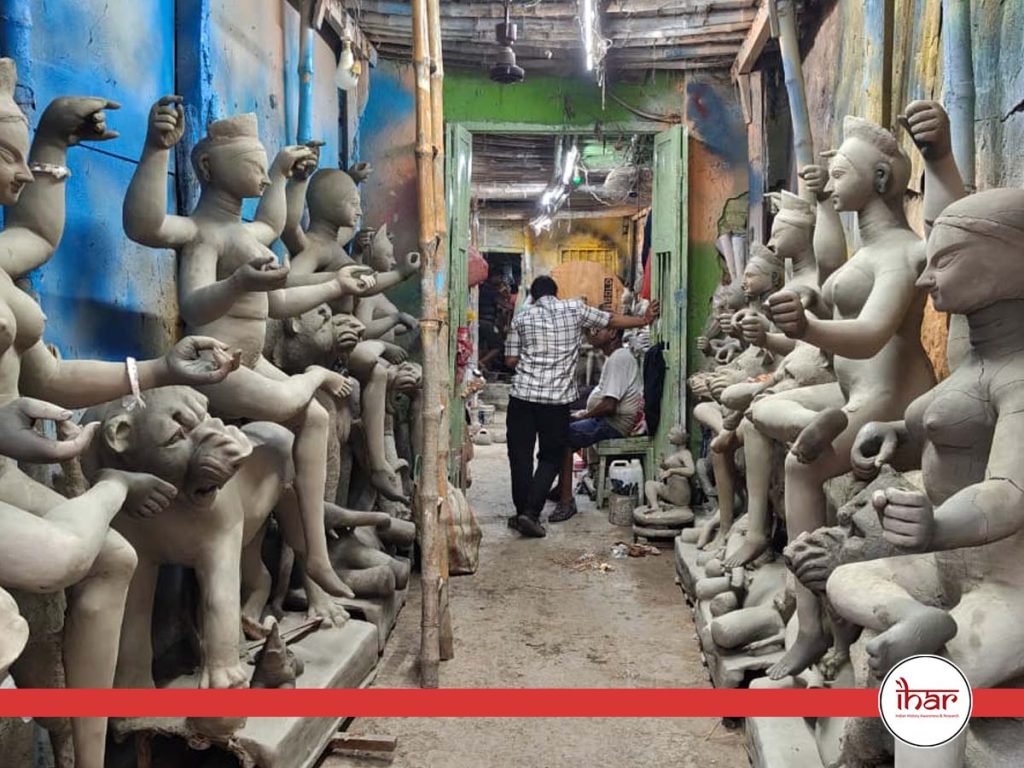
The walk then entered Kumartuli, where artisans were crafting Jagaddhatri idols.
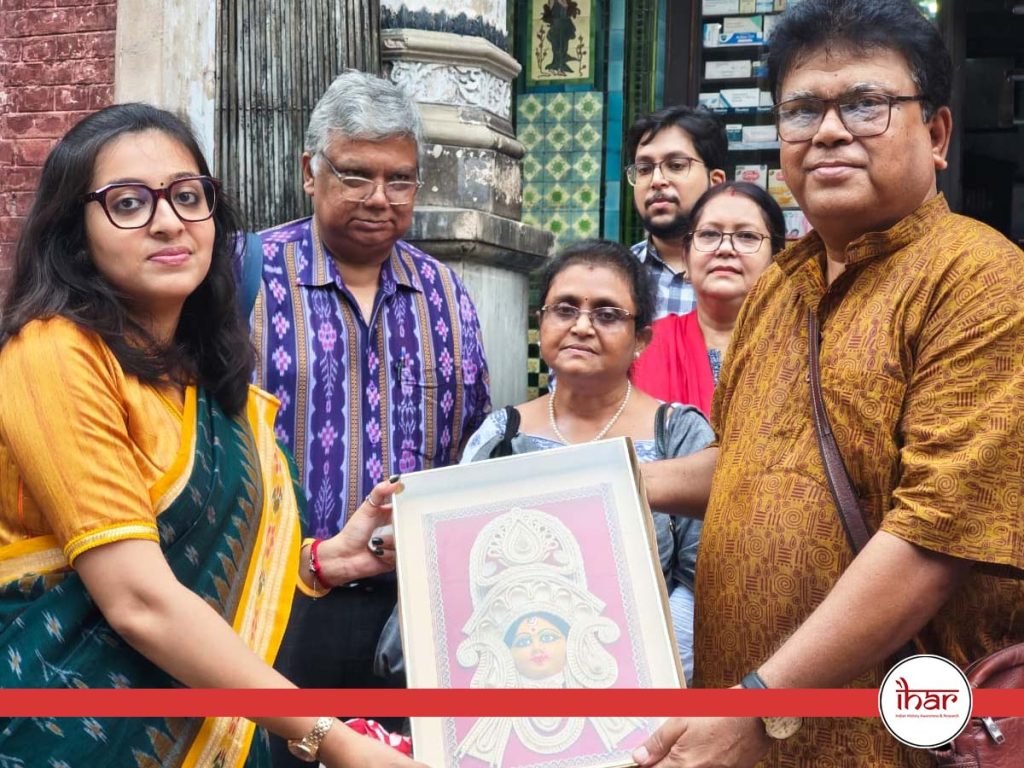
Participants met Amit Ranjan Karmakar, a rare collector and restorer of vintage radios, tape recorders, and gramophones—all maintained in working order.
Radhagobinda and Baneshwar Shiva Temples
The Radhagobinda Temple and the Aatchala Baneshwar Shiva Temple, built by Bonomali Sarkar, another British-era official, were the next stops.
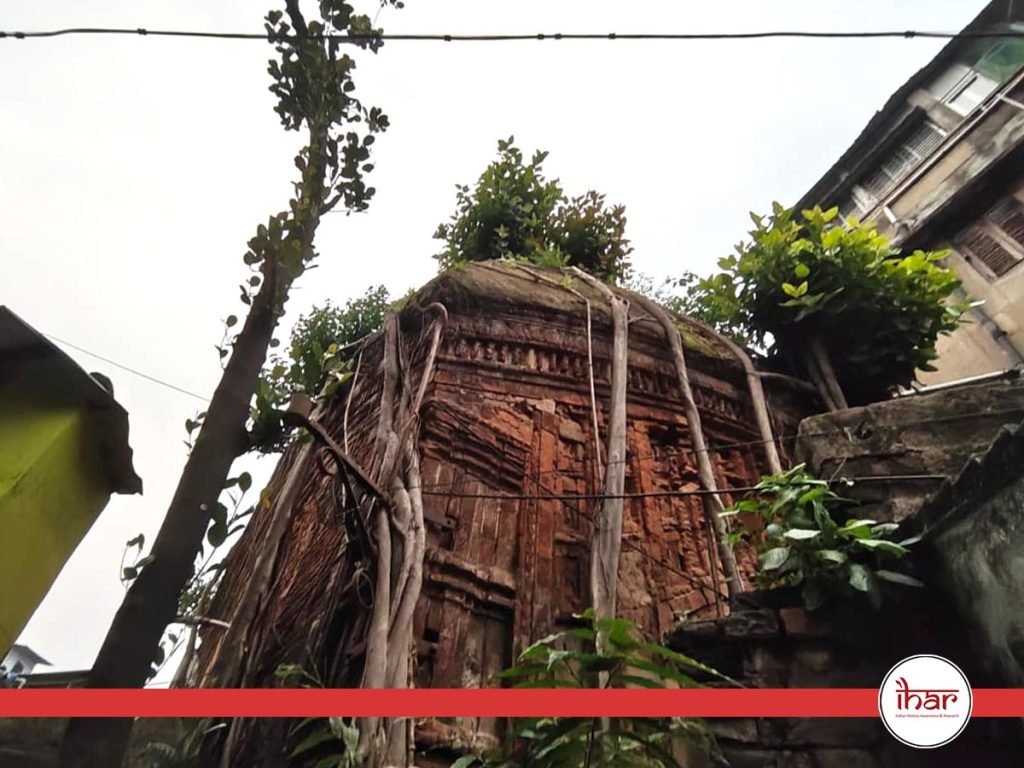
While the Radhagobinda Temple remains in fair condition, the Baneshwar Shiva Temple lies in neglect, its once-fine terracotta work fading amid weeds.
Kaviraj Gangaprasad Sen’s House
The group then visited the home of Kaviraj Gangaprasad Sen, the eminent 19th-century Ayurvedic physician who migrated from Bikrampur (Dhaka) in 1840.
Revered for his skill, he once treated Sri Ramakrishna Paramahansa and famously predicted that the saint’s illness was incurable—a prophecy now part of Bengal’s spiritual lore.
Dhakeshwari Temple
The Dhakeshwari Temple in Kumartuli houses a 800–1000-year-old ashtadhatu idol, originally enshrined in Dhaka by King Ballal Sen.
After Partition, the idol was smuggled to Calcutta in 1948 and relocated to its present temple in 1950, where it continues to be worshipped.
Madanmohan Temple
The majestic Madanmohan Temple, established in 1761 by Gokul Chandra Mitra, came next.
Once spread across 56 bighas, the temple houses a black stone deity associated with a legend involving King Chaitanya Singh of Mallabhum.
Its Raas and Annakut festivals are still celebrated annually.
Siddheshwari Mata Temple and the Black Pagoda
The final stop was the Siddheshwari Mata Temple in Baghbazar, believed to be over 500 years old.
Founded by a monk named Kalibor, it later came under the worship of the Chakraborty family and their descendants.
The goddess, affectionately known as “The Ginni Maa of Baghbazar,” was revered even by Girish Ghosh and Sri Ramakrishna, the latter once offering tender coconuts for the recovery of Keshab Chandra Sen.
Across the street stands the Black Pagoda, constructed between 1725 and 1730 by Govinda Ram Mitra, the second native revenue collector after Nandaram Sen.
Standing originally over 165 feet tall, it once surpassed even the Ochterlony Monument (Sahid Minar) in height before being partially destroyed in the cyclone of 1737.
Its surviving fragments still whisper tales of Sutanuti’s lost grandeur.
⸻
A Journey Through Memory
Thus concluded IHAR’s first heritage walk—a journey through the forgotten heart of Sutanuti, where every lane, temple, and crumbling mansion still bears the faint echo of Calcutta’s beginnings.
Though time has erased much of the physical landscape, the spirit of Sutanuti endures—in its names, in its memories, and in the hearts of those determined to rediscover it.