Palamu’s Forts and Palaces: Unfolding a Forgotten Royal Heritage
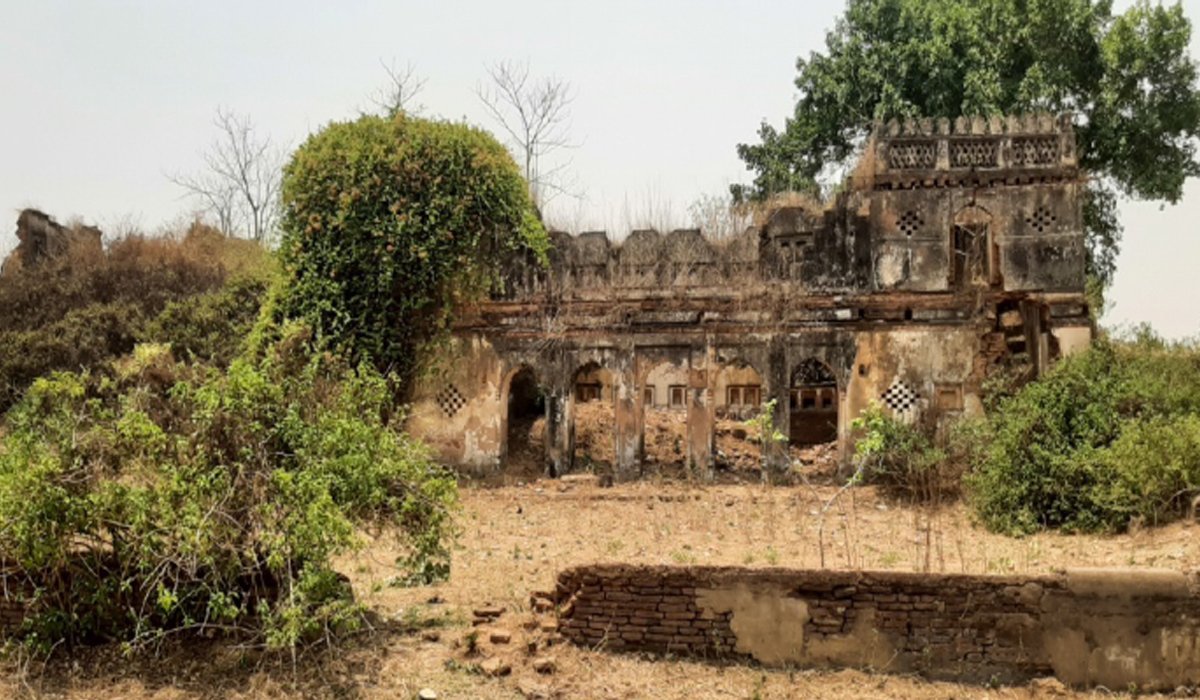
Palamu district in Jharkhand preserves a remarkable yet largely overlooked legacy of forts and palaces that embody a fusion of Mughal elegance and local tribal traditions. These historic structures, now mostly in ruins, still stand as powerful testimonies to the region’s political history, cultural identity, and architectural ingenuity.
Palamu: Land, Rivers and Royal Memory
Palamu lies in the Chotanagpur Plateau, between 23°50’–24°08′ N latitude and 83°55’–84°30′ E longitude, bordered by Chatra and Hazaribagh to the east, Garhwa to the west, Bihar and the Son River to the north, and Latehar to the south. The Koel River and its tributaries, Auranga and Amant, not only sustain the land but have historically supported settlements, agriculture and fortifications across this landscape.
Beyond its forests and wildlife, Palamu is distinguished by a rich cultural heritage expressed through a chain of forts and palaces that once guarded power corridors and caravan routes in this frontier zone of eastern India.
Twin Palamu Forts: Purana Kila and Naya Kila
At Medininagar, the twin Palamu Forts—Purana Kila (Old Fort) and Naya Kila (New Fort)—form the core of the region’s monumental heritage. Both are associated with the Chero dynasty, which consolidated its authority here between the sixteenth and seventeenth centuries.
-
Purana Kila, attributed to Raja Medini Rai in the sixteenth century, functions as a defensive hill–plain fort and preserves features like Singh Darwaza, an inscription on the north gate, and secret chambers and tunnels.
-
Naya Kila, linked to Raja Pratap Rai in the seventeenth century, displays Nagpuri Gate, arabesque motifs and an inscribed pillar, again combined with concealed passageways that suggest both strategic planning and a sophisticated sense of security.
Together, the twin forts encapsulate the evolution of Chero power, from early defensive strongholds to more elaborate Indo-Islamic–influenced fort architecture.
Kakrigarh Palace: Vanished Fort of Raja Medini Rai
Kakrigarh Palace in Panki block is remembered as the Garh of Raja Medini Rai, a sixteenth‑century defensive palace of the Chero rulers. Today the structure is almost wholly vanished, but surviving sandstone fragments and pottery testify to a once vibrant architectural complex.
-
Architectural remains include lintel-like sandstone pieces with repeated lotus‑petal (kamalakara) motifs and semicircular designs, suggesting a refined ornamental vocabulary.
-
Terracotta sherds with incised linear decoration, large storage‑vessel fragments, and weathered brick pieces reveal domestic activity, construction techniques and ceramic traditions at the site.
These finds are crucial for reconstructing chronology, everyday life and craftsmanship in Palamu during the medieval Chero period.
Chainpur Garh: Fort of the Thakurais
Chainpur Garh, the old fort of the Thakurais of Chainpur, dates to the sixteenth century and again falls within the Chero political sphere. The fort combines hill and plain elements, indicating a strategic choice of terrain for both surveillance and defense.
-
Surviving features include decorated gateways, corridors, a substantial water tank, secret chambers and tunnels, and an early‑medieval panchmukhi Shivlinga depicting Shiva with five heads.
-
This coexistence of military architecture and Shaiva sacred space underlines how political authority, religious practice and regional identity were deeply intertwined in Chainpur.
Ladi Garh: Courtly Life and Seven Yards of Power
Ladi Garh, or Ladi Palace, at Ladi in Chainpur block, represents a later phase of regional history, associated with the Biswen Rajputs of the Manjhauli Raj family from Gorakhpur. Built by Kuar Ambika Prasad Singh between the late eighteenth and twentieth centuries, the complex stands as a plain fort marked more by courtly than purely military functions.
-
The palace was known as “The Seven Yards of House”, indicating a series of sequential residential and administrative yards.
-
Key elements include the court of Kuar Ambika Prasad Singh, where judicial and administrative proceedings, ceremonial gatherings and cultural programmes were held, along with secret tunnels and chambers integrated into the layout.
Deepmandav (lamp niches) in the walls, arched gateways with scalloped arches, and pillared or open courtyards highlight an Indo‑Islamic aesthetic infused with local sensibilities.
Shahpur Palace and the Wider Fort Network
Shahpur Palace, near Medininagar, extends the chain of fortified residences into the late eighteenth century. Linked with Raja Gopal Rai of the Chero line, this structure is especially noted for its mysterious passages and secret chambers.
Across Palamu, these forts and palaces—Purana Kila, Naya Kila, Kakrigarh Palace, Chainpur Garh, Shahpur Palace and Ladi Garh—form a connected network of power centres that mirror shifts in dynasty, alliances and regional politics from the medieval to the colonial period. Their shared motifs of gateways, tunnels, courtyards and ritual spaces underscore a common architectural language adapted to varied functions and eras.
Architectural and Cultural Significance
The forts and palaces of Palamu capture a nuanced blend of Mughal, Indo‑Islamic and tribal traditions visible in arches, ornamental stonework, courtyard planning and ritual niches. Features like deepmandav, panchmukhi Shivlingas, water tanks, secret tunnels and decorated gates speak to both religious devotion and pragmatic design.
Even fragmentary finds—terracotta sherds, brick pieces, stone lintels and carved motifs—provide vital evidence for understanding construction technology, ceramic traditions and artistic choices in this frontier region. Collectively, these structures act as “living storytellers”, narrating episodes of resistance, adaptation and cultural synthesis over several centuries.
Urgency of Conservation and Public Engagement
Most of Palamu’s forts and palaces survive in a ruined or severely weathered state, threatened by neglect, encroachment and natural decay. Yet they hold immense potential for community‑based heritage tourism, academic research and local cultural pride.
Strengthening documentation, encouraging archaeological and architectural surveys, and involving local communities in preservation can transform these fading remains into anchors of sustainable development. Safeguarding Palamu’s architectural heritage is not only an act of conservation but also a commitment to ensure that the stories, identities and memories embedded in these stones continue to inspire future generations.